AI governance events are useful market signals because they reveal where enterprise buyers are still uncertain. Singapore's AI governance guidance points to accountability, model limits, data use, documentation and post-sale support as practical questions for procurement, legal, risk, data and technology teams.
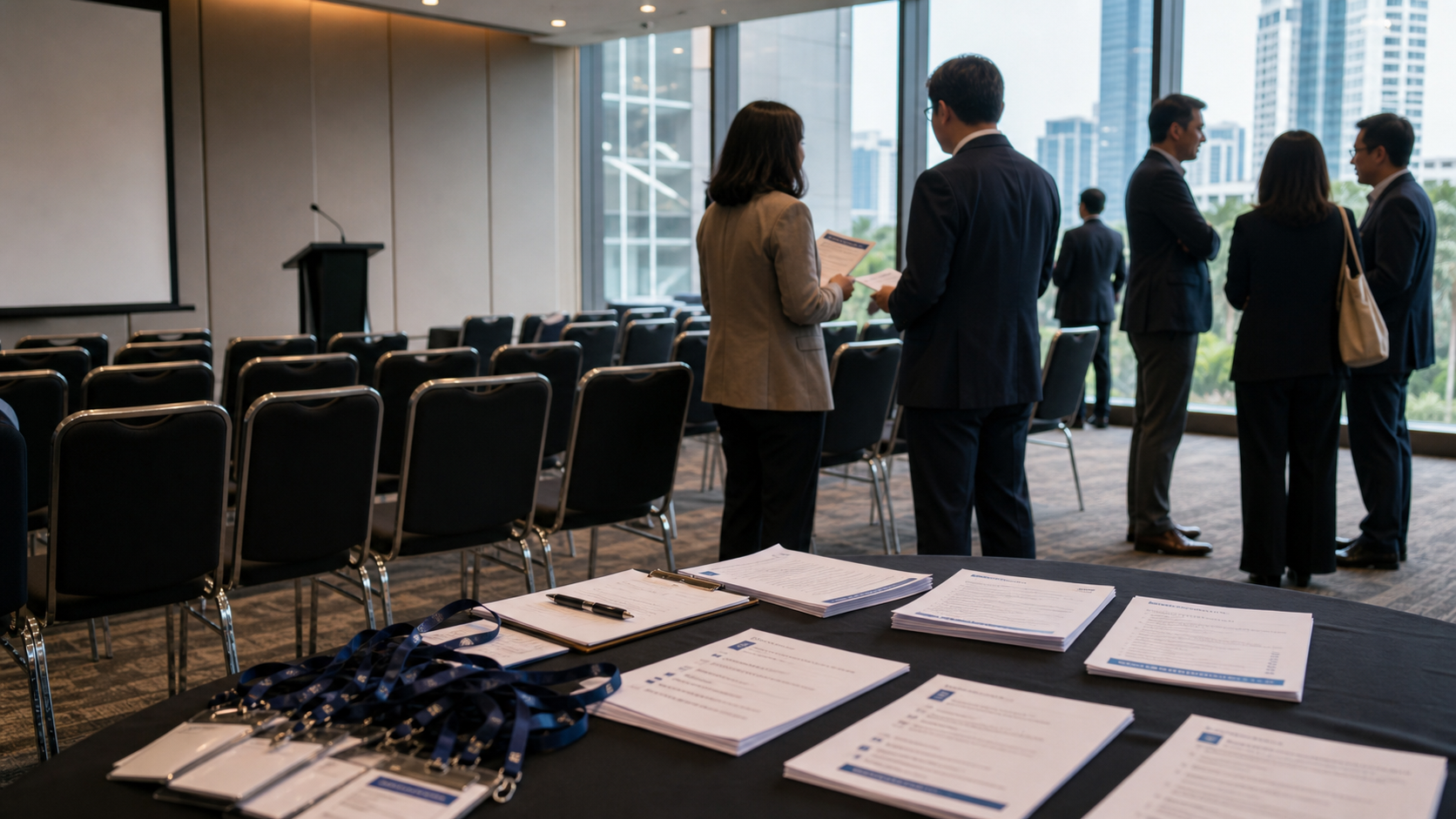
That makes a governance forum more than a policy gathering. When the agenda includes enterprise buyer tracks, assurance tools, testing frameworks or implementation sessions, it can show which questions are moving from conference panels into procurement rooms.
The agenda is moving closer to buying decisions
Singapore’s AI governance approach and the ASEAN guide both point to practical governance themes: accountability, transparency, human oversight, risk management and responsible deployment. These are not abstract concerns for enterprise buyers. They become vendor-screening questions once AI systems touch customers, employees, regulated data or critical workflows.
For AI vendors, governance is becoming part of sales enablement, not a policy appendix.
What enterprise tracks should test
- Can vendors explain model limits without hiding behind technical language?
- Can buyers see who owns governance after procurement?
- Are implementation risks mapped to local markets, languages and regulators?
- Is there evidence beyond demos, pilots and global claims?
- Can the vendor show testing, monitoring and escalation processes that match the buyer’s risk level?
Assurance is becoming part of the proof pack
AI Verify's public work gives one example of how testing and assurance language is becoming more operational. For buyers, the useful signal is not whether a vendor uses one specific framework. It is whether the vendor can explain how it tests, documents and improves systems in a way that can be reviewed by non-technical stakeholders.
How market-entry teams should use the signal
For Southeast Asia market-entry teams, governance events should be treated as buyer research. The questions asked on stage often become the questions raised later in enterprise procurement, especially in regulated industries or public-sector-adjacent markets.
Why the buyer signal is useful
Separate the signal from buyer proof
For buyers, the useful article should map the diligence question: what evidence should a vendor prepare, which operating control is visible, and what follow-up source would prove implementation. That keeps governance coverage practical without turning it into legal advice or a market ranking.
Many AI vendors still lead with capability claims: faster workflows, better decisions, lower cost or smarter automation. Governance sessions reveal the counterweight. Buyers want to know what happens when the model is wrong, when data provenance is unclear, when a regulator asks for documentation or when a business unit wants to expand a pilot into production.
That is why event coverage should not simply list speakers. The stronger editorial angle is to identify which buying questions are becoming more visible: assurance, procurement accountability, human oversight, localisation, documentation and post-deployment monitoring. The ASEAN guide and AI Verify both help frame those questions without turning event attendance into adoption proof.
A useful follow-up article should therefore name the event, identify the buyer questions surfaced, link the public sources and explain what vendors should prepare next. It should not claim that one market is ahead, that a vendor is preferred, or that governance attendance proves adoption.
Public coverage should also be careful about what an event can and cannot prove. A forum can show what questions are being discussed, which agencies or ecosystem groups are active, and where buyer concerns are becoming more specific. It cannot prove adoption, product quality or market leadership without additional evidence.
That distinction is important for SEA Connect. The useful reader service is to translate governance activity into practical buying implications: what documentation to prepare, which proof points to make public, which claims to avoid and which questions to expect from enterprise stakeholders.
That is the article value.