
AIMX Singapore is centring its 2026 programme on a useful enterprise question: what is required to move artificial intelligence from a pilot into a repeatable operating process. That puts buyer evidence, not organiser attendance claims, at the centre of the editorial test.
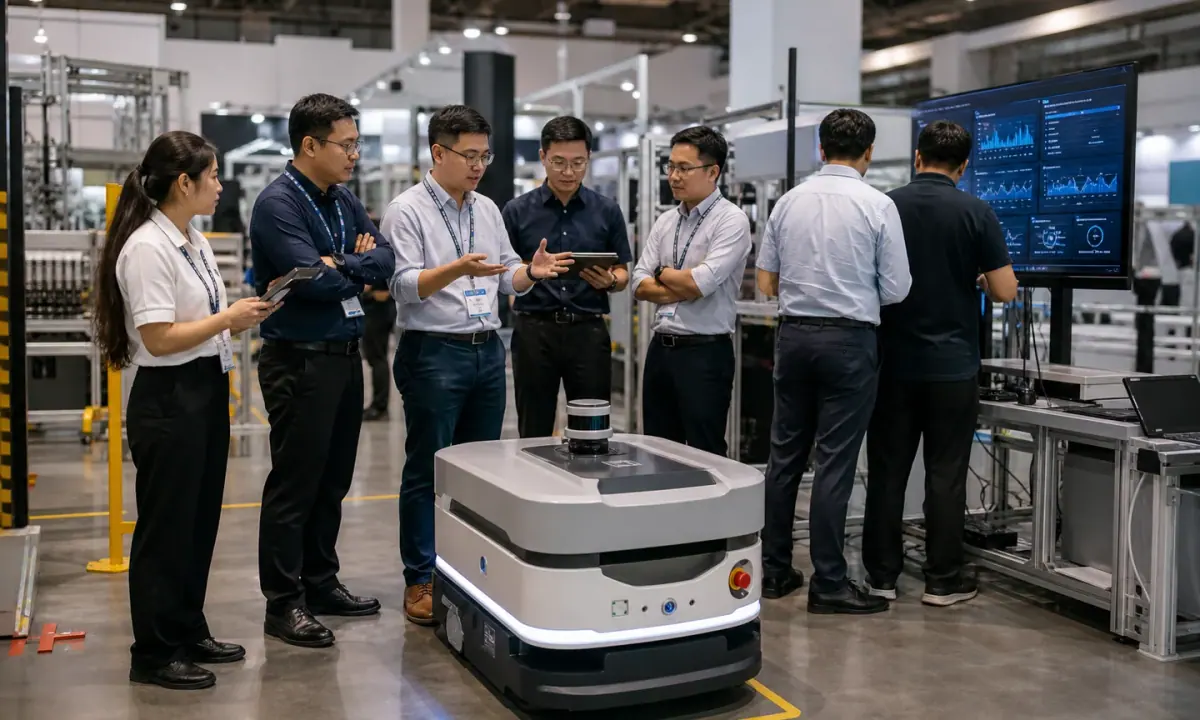
The announced programme spans healthcare, robotics, logistics, transportation and retail, with demonstrations, startup showcases and business matching intended to connect technology suppliers with enterprises and research organisations. The breadth can help buyers compare approaches, but it also makes sector-specific scrutiny essential. PR Newswire IPI Singapore TechInnovation
An event, demonstration or introduction is not evidence that a deployment is delivering value. Claims about scale, productivity or commercialisation remain statements from organisers and participants until supported by operating results, named users and a comparison with the process that the technology is meant to improve.
For enterprise buyers, the first gate is problem definition. A team needs a bounded process, an accountable owner and a baseline for cost, time, accuracy or service quality before a vendor demonstration can become a meaningful trial. Without that baseline, a polished prototype may generate attention while leaving the business case unresolved.
The second gate is operational fit. Buyers need evidence on integration effort, data readiness, permissions, human oversight, reliability, security and exception handling. A system that works on a curated exhibition task may perform differently when connected to incomplete enterprise data or exposed to unpredictable customer and employee behaviour.
Cross-sector comparison can still be valuable when the comparison is disciplined. Healthcare deployments need clinical safety and privacy controls; logistics systems need reliable performance across physical operations; retail applications must handle customer consent and volatile demand. A single headline metric cannot establish readiness across those settings.
The participation of IPI Singapore’s TechInnovation platform adds a practical technology-matching layer for smaller firms. Its value will depend on whether introductions progress through documented problem scoping, technical assessment and commercial ownership into trials, procurement, licensing or another traceable adoption outcome.
Business matching should therefore be treated as the start of a conversion funnel, not its result. Useful follow-up evidence would include how many meetings become evaluations, how many evaluations become live trials, how long integration takes and why prospective deployments are stopped. Failed trials can be informative if the reasons are recorded rather than hidden.
The regional relevance comes from execution learning that can travel beyond one event. Enterprises across Southeast Asia face similar constraints around fragmented data, legacy systems, skills and governance, even when regulation and market conditions differ. Reusable deployment methods would be more valuable than a larger catalogue of unverified tools.
The next evidence to watch is post-event: named enterprise implementations, deployment timelines, baseline and follow-up measures, the frequency of human intervention and the number of technology matches that progress into sustained commercial use. Until those results emerge, AIMX is a potentially useful market-making mechanism rather than established enterprise AI impact.