Ant International said on 11 September that it is taking its Agentic Mobile Protocol, or AMP, into a broader collaboration phase with wallet and merchant-acquiring partners. The company also said it has begun work with Mastercard and Visa on a Know Your Agent, or KYA, interoperability framework. That is a technical announcement, but it lands on a familiar regional problem: a payment instruction can cross borders faster than a customer, merchant or regulator can understand who initiated it and what authority that software had.
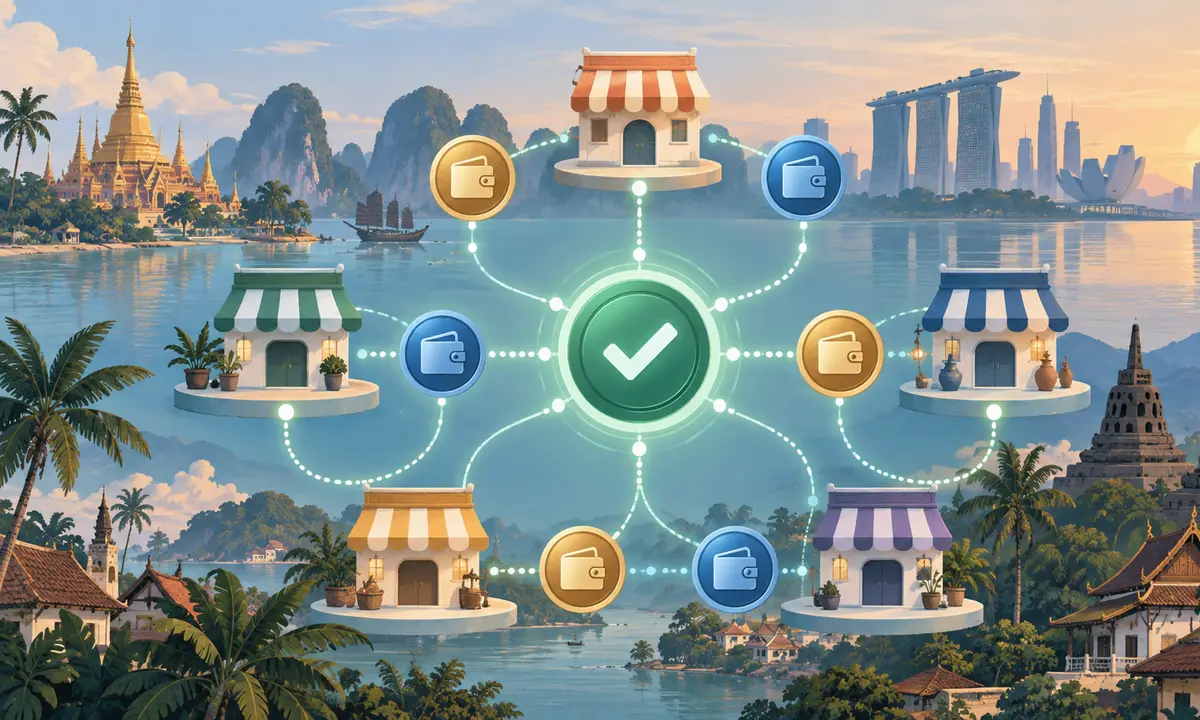
The company describes AMP as a protocol for transactions initiated by AI agents on mobile devices. Its announcement names DANA in Indonesia, GCash in the Philippines, TNG eWallet in Malaysia, TrueMoney in Thailand and Starryblu in Singapore among the phase-one wallet partners. It says acquirers are also part of the collaboration. Those names establish the regional relevance of the work; the announcement does not describe a shared agent-payment service already available to consumers in each market.
The more useful signal is the emphasis on permissions and identity. In an ordinary digital payment, a customer authorises a transaction through a familiar journey. In an agent-led journey, the hard operational questions move upstream: which agent acted, which party delegated authority, what limits applied, and how a merchant or wallet can verify that chain. Ant says the KYA framework is intended to address agent identity and permission interoperability with the card networks. The framework is still described as an initiative, rather than a completed market standard or a regulatory approval.
For product, risk and partnership teams, the announcement is a prompt to separate three layers that are often bundled together: an AI interface, a payment instruction and a permission record. A smooth interface does not by itself answer whether an agent was allowed to make a purchase, amend a booking or select a payment method. That distinction matters especially where wallets, merchants and acquiring partners operate across different national regimes and customer-support expectations.
The timing also shows why protocol discussions may matter before visible consumer launches. A regional wallet can support a familiar local payment journey while still facing different merchant acceptance, dispute, fraud and data-handling arrangements abroad. A common mechanism for expressing an agent’s scope could reduce ambiguity between participants, but it would have to be implemented consistently and tested against real disputes before it becomes a meaningful trust signal.
Ant says the collaboration builds on work through Singapore’s BuildFin.ai platform, convened by the Monetary Authority of Singapore, and the Singapore FinTech Association’s Agentic AI Risk and Governance Framework. The important operational details will be named pilot terms, which transactions are in scope, how customers can revoke an agent’s authority, and whether partners describe common handling of failed or disputed instructions.
For Southeast Asian operators, the immediate lesson is not to assume that agentic commerce is a single product category. It is a chain of identity, consent, payment and recovery decisions. Any cross-border collaboration that makes those decisions visible could be useful; any that leaves them opaque will make scale harder.
Source note
This report is based on Ant International’s announcement, the associated PR Newswire release and the Monetary Authority of Singapore media release. Announced collaboration is presented as an initiative, not a completed market standard.