
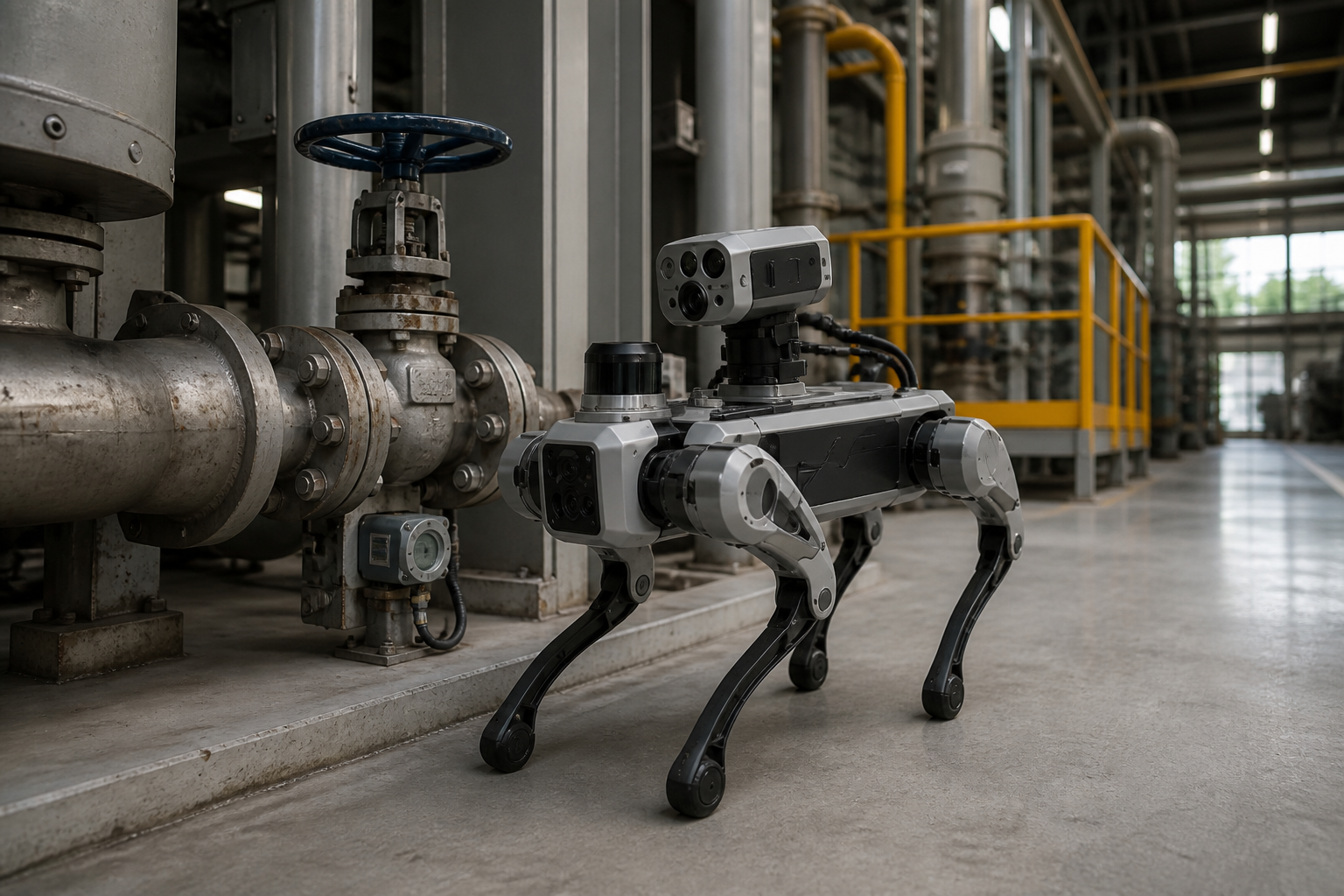
Avnet and Singapore-based Weston Robot have announced an industrial inspection platform that combines edge computing, artificial intelligence and an autonomous robot. The companies say the system is designed for factories, utilities, transport, logistics and other complex facilities. The development matters to Southeast Asia’s innovation economy because it connects Singapore robotics capability with a route from component design to industrial deployment.
What the platform is designed to do
The platform is intended to perform continuous monitoring in facilities where inspection can be manual, reactive or difficult to carry out safely. According to the company release distributed through ANTARA on 10 August, its planned functions include object and anomaly detection, monitoring of protective-equipment compliance, intrusion detection, and thermal and visual checks for hotspots, leaks and equipment abnormalities. ANTARA News Agency
The companies say the robot uses 3D LiDAR simultaneous localisation and mapping to build maps, navigate without reliable GPS, avoid obstacles and adjust inspection routes. They position the system for environments such as factories, warehouses, ports, utilities and tunnels. These are intended capabilities described by the suppliers, not independently measured field results.
How Avnet and Weston Robot divide the work
Avnet’s role is to provide computing platforms, engineering support and access to technology partners. Weston Robot contributes the autonomous robotics platform and industrial deployment expertise. The release says the combined approach is meant to help customers move from development to production with less integration work, but it does not disclose signed customers, deployment volumes or a commercial timetable.
The companies say the system uses AMD Ryzen AI Embedded processors and can execute AI workloads on the device. Processing at the edge can reduce dependence on cloud connectivity and shorten response times. The release states performance of up to 50 TOPS, but that specification alone does not show inspection accuracy, operating cost or reliability in a customer environment.
What would prove industrial value
For manufacturers and infrastructure operators, the useful evidence will be deployment data: how often the system detects a problem, the false-alert rate, time saved compared with manual inspections, uptime in difficult conditions and the cost of integration. Safety claims also require operational validation and clear responsibility when automated decisions trigger action.
Source note
This report is based on the Avnet release distributed through recognised wire service ANTARA at 13:29 GMT+7 on 10 August. SEA Connect has retained the suppliers’ plan language and technical specifications as attributed claims. It has not treated proposed capabilities as completed customer outcomes or reused the wire image.