
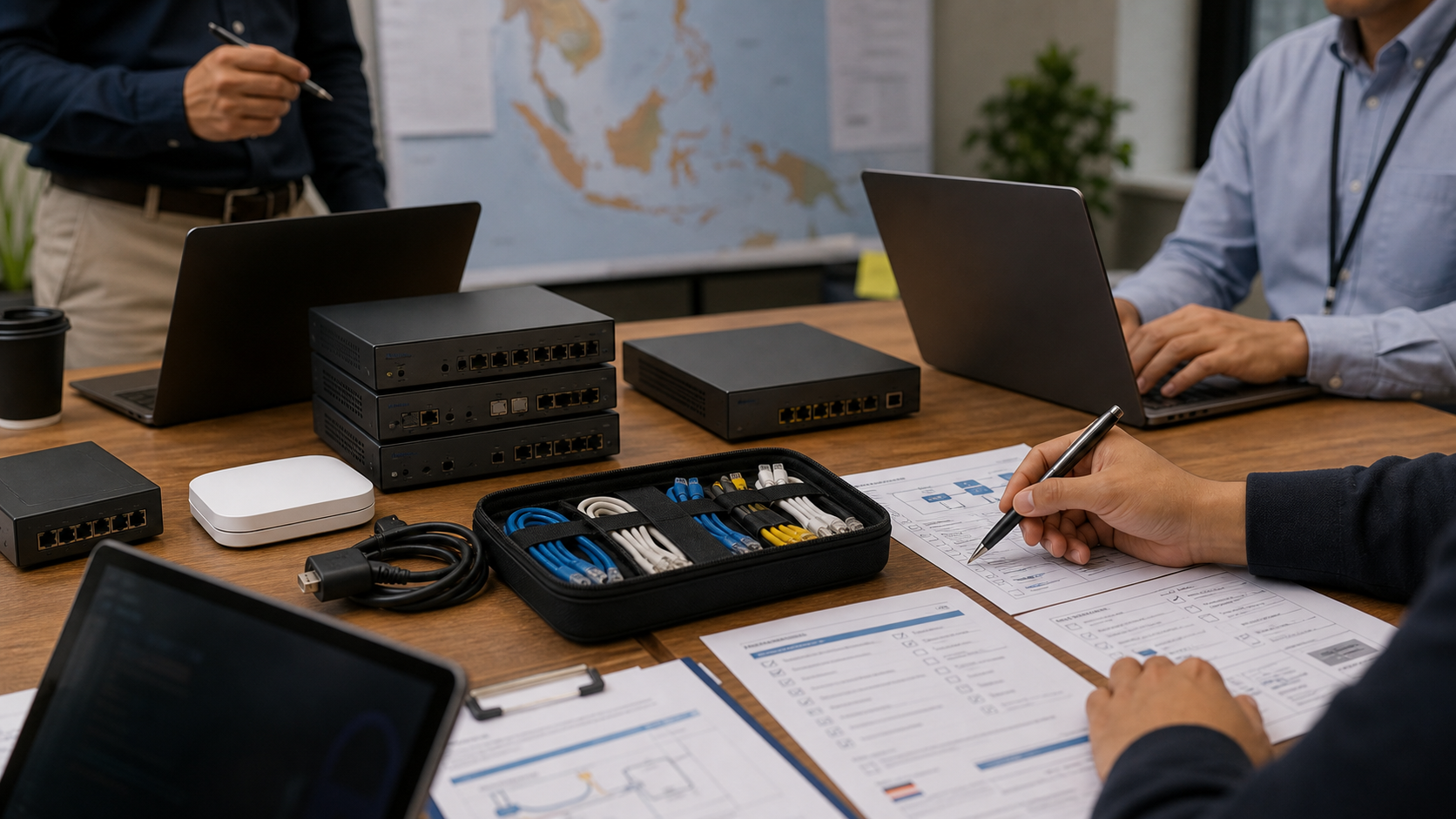
ASEAN Cybersecurity Cooperation Strategy 2021-2025 provides the source base here. Cybersecurity growth in Southeast Asia is not only a threat story. For buyers, the more practical question is whether a vendor has the local partner depth, incident-support model and implementation credibility to stay useful after the contract is signed.
Singapore Cybersecurity Act overview is useful context here: Public cybersecurity policy in Singapore and ASEAN highlights resilience, cooperation and operational readiness. That context does not establish demand for any individual company, but it explains why channel depth and trusted local support matter in security buying.
Cybersecurity is local even when threats are regional
Microsoft Digital Defense Report 2025 is useful context here: Threat intelligence and defence reporting from large technology platforms can help frame the regional risk environment, but buyers still need local implementation evidence. A channel announcement is stronger when it explains where support will sit, which partner capabilities matter and how incident response will be coordinated.
A strong channel story explains who will help the customer after the contract is signed.
What buyers should look for
- Named priority markets, not only “ASEAN expansion”.
- Partner capability, certification or implementation evidence.
- A clear support model for incidents and escalations.
- Sector relevance for regulated, infrastructure or operational-technology environments.
- Proof that the channel lead can translate technical risk into board-readable action.
Singapore Operational Technology Cybersecurity Masterplan 2024 is useful context here: Operational-technology guidance is a reminder that cybersecurity is not only a software purchase. In critical or industrial environments, the buyer may need proof around governance, maintenance windows, partner expertise and incident handling as much as product features.
What turns a channel note into a buyer signal
A cybersecurity channel update becomes useful when it names the company, describes the role, links the source and explains why the appointment changes buyer or partner access. Without that context, the item is only a personnel note.
The proof test is simple: does the update explain why the appointment improves buyer confidence or local implementation? Stronger signals include a named partner, a customer-facing proof point, a certification programme or a clearer support model.
That keeps channel coverage tied to customer value rather than personnel theatre. The operating proof matters more than the job title.
What turns a channel note into a regional signal
A channel note becomes a regional signal when it links a named appointment or partnership to a customer problem. For cybersecurity, that problem might be incident response, managed detection, cloud security, OT resilience, compliance reporting or board-level risk communication.
The story should therefore ask for more than a title. It should ask which partners are involved, what capability they add, what certifications or delivery experience they bring and which customer segment the company is prioritising. Without those details, the item belongs in a private source queue rather than on the public site.
For readers, the next useful source would be a named ASEAN partner announcement, a customer implementation, a channel certification programme or a public threat-readiness report that explains where local support is changing. That would make the story more current and less dependent on policy context alone.
Until those sources are available, the story should stay in the briefing lane. It can explain why channel trust matters and what proof would make a future company update more useful, but it should not pretend to report a fresh company move. That distinction keeps the site from turning placeholder channel ideas into pseudo-news.
The next source-capture step is clear: ask vendors, partners and security practitioners for named examples of how regional support is being built. Those examples can turn the article into a stronger public piece without relying on generic threat language.