
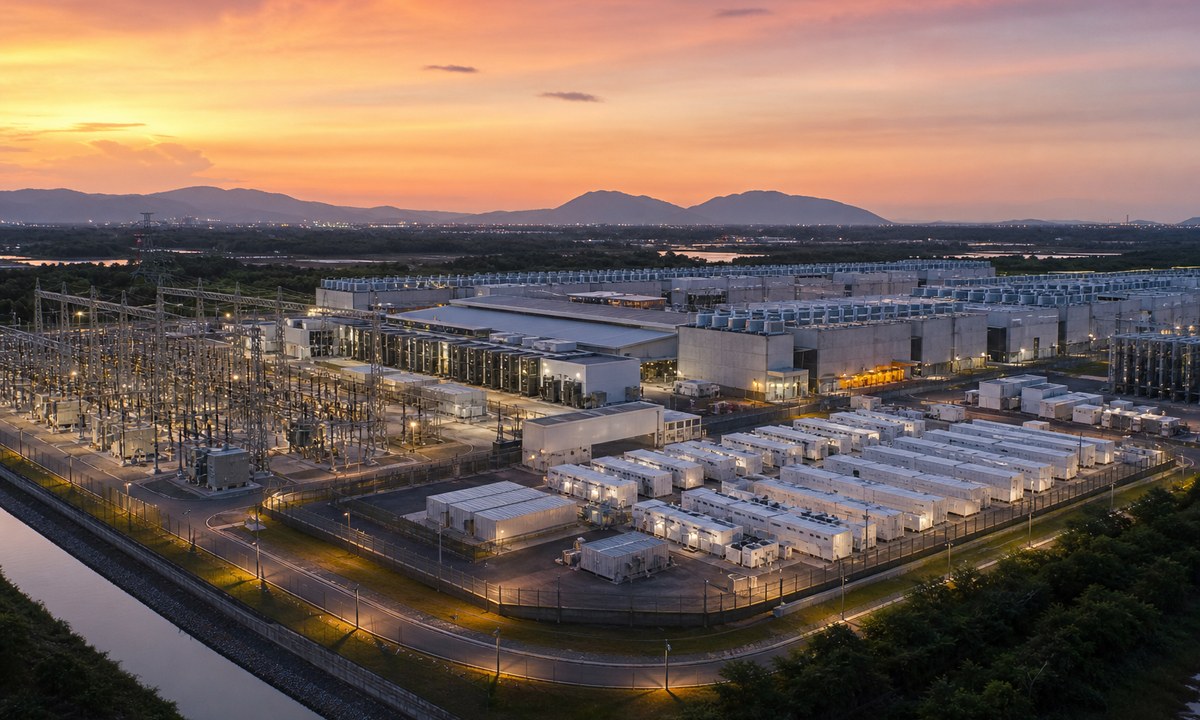
DayOne and Tenaga Nasional Berhad have agreed to study an on-site power solution of up to 1.5 gigawatts for a planned data-centre development in Selangor. The proposal includes the potential use of battery energy storage and is intended to support a new hyperscale campus in the Greater Kuala Lumpur region.
The number is significant, but its status matters more. This is a feasibility process under a memorandum of understanding. It is not approved, financed, built or commissioned generation capacity. Final scale, configuration and delivery will depend on technical studies, commercial agreements and regulatory approvals.
For Malaysia, the study illustrates how electricity supply is becoming one of the main constraints on data-centre growth. New AI and cloud facilities require large, reliable power allocations, while governments and utilities are under pressure to protect grid resilience and improve the carbon profile of new demand. An on-site model could provide flexibility, but it also raises questions about fuel mix, grid integration, storage economics and oversight.
The proposed scale makes sequencing important. A campus does not need its full potential power requirement on day one, and generation, grid connections and data halls may advance on different schedules. A credible plan would therefore need staged demand assumptions, reserve margins and clear responsibilities between the developer, utility and any generation partners. Without that detail, the headline capacity is best treated as an upper study boundary rather than a delivery commitment.
Battery storage could support resilience and help manage short-term variations, but storage does not replace the need for a dependable primary electricity supply. The commercial case will depend on how the system is configured, how often it is expected to operate and which costs sit with the campus or the power provider. Those choices will shape both operating economics and the environmental profile that customers can credibly report.
DayOne already operates in Johor, so the Selangor proposal also signals a wider Malaysian footprint. The milestones to watch are the feasibility findings, the eventual generation mix, regulatory treatment, firm capacity commitments and construction timetable. Until those facts are available, this belongs in a tracker rather than being presented as a completed infrastructure project.
The wider regional signal is that data-centre site selection is becoming inseparable from energy planning. Developers comparing Southeast Asian locations increasingly need to assess available capacity, connection timing, regulatory certainty and expansion headroom together. If the study progresses, Selangor could offer another Malaysian cluster beyond Johor. If it does not, the gap between property announcements and power delivery will remain the central constraint.
Customers evaluating the future campus should ask for milestones rather than rely on the maximum study figure. Useful evidence would include an agreed technical design, identified generation sources, a grid-integration plan, regulatory approvals and a staged delivery schedule tied to occupied data halls. That sequence would make it possible to judge whether the proposed power route supports resilient growth without shifting unresolved infrastructure risk onto customers.
Source note
The source links are listed below. PR Newswire Asia