
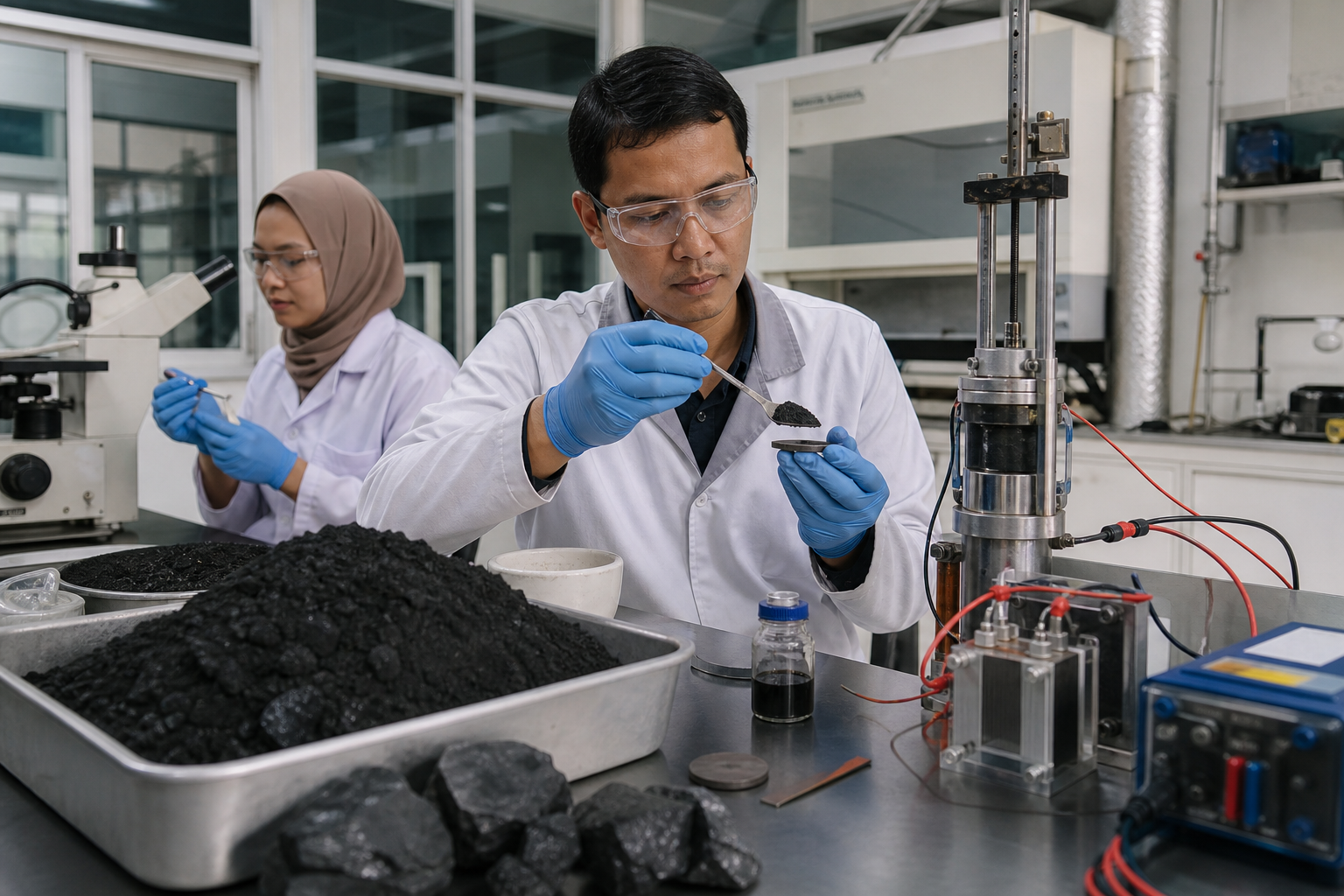
Indonesia is testing whether coal waste can become artificial graphite for lithium-ion batteries, a research step that could add a domestic material to the country’s electric-vehicle supply chain.
The National Research and Innovation Agency, or BRIN, reported 96.8 per cent structural conformity in the material and said it had been tested in a five-volt lithium-ion battery. The result remains a laboratory finding and commercial-scale production has not been demonstrated. ANTARA News Agency
Graphite is a core battery material. Turning an industrial waste stream into a usable input could reduce imports and create more value inside Indonesia, but only if the process can meet consistent quality, cost and environmental standards at scale.
Battery makers and investors should now watch for independent performance testing, pilot production volumes and a named route from BRIN’s laboratory work to industrial partners.
The commercial test is whether the material can be produced repeatedly and competitively, not just whether one laboratory sample works.
The research also highlights a practical industrial question: whether a local waste stream can become a consistent battery-grade input. Reaching that point would require repeatable purity, stable production costs and qualification by cell makers. Until those tests are complete, the work is best understood as an early materials-development signal rather than a new domestic supply source.
Indonesia already has an expanding electric-vehicle supply chain, but laboratory progress does not guarantee a competitive material business. The decisive evidence will be independent performance testing, a repeatable production method and a buyer willing to qualify the material. Researchers will also need to show how much coal waste can be used safely and what treatment is required before the process could operate at industrial scale.
Source note
ANTARA News reported the dated source facts. Plans and targets remain attributed and are not presented as completed outcomes.