
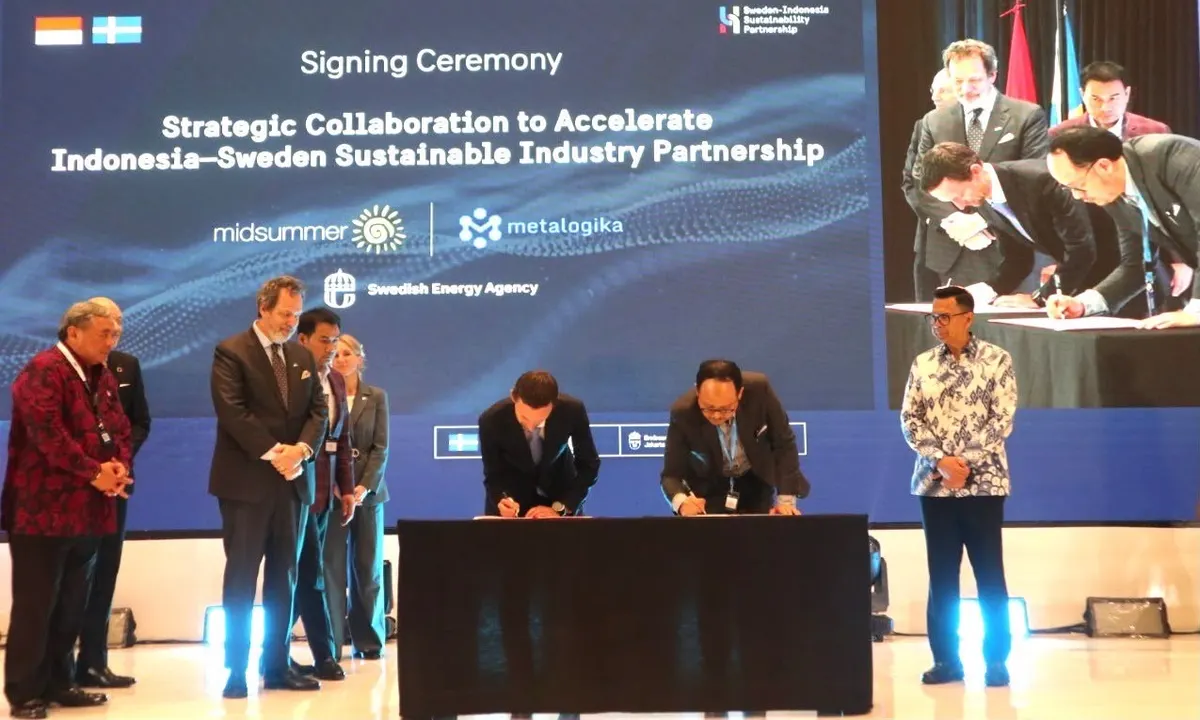
Swedish solar manufacturer Midsummer and Indonesian industrial technology company Metalogika have signed a binding investment and industrialisation framework for local thin-film solar production. The plan starts with a joint venture and an initial 20 megawatts of annual capacity, adding a defined manufacturing proposal to Indonesia’s effort to build more of its clean-energy supply chain at home.
What is moving
Midsummer said the venture would produce flexible copper indium gallium selenide solar cells and modules using its equipment and manufacturing knowledge. The company plans to supply its DUO production systems and related services, while taking a minority stake in the proposed venture. Metalogika would provide the Indonesian industrial base and local execution role.
The agreement gives the project more structure than a general cooperation statement, but several steps remain. Midsummer said equipment procurement would follow incorporation of the joint venture and satisfaction of agreed conditions. The companies did not disclose the investment value, final ownership split, equipment order value or a commissioning date.
What remains open
The initial 20MW scale is modest beside large crystalline-silicon factories, yet the technology follows a different route. Thin-film modules can be lightweight and flexible, which can suit roofs or structures that cannot take conventional glass panels. Commercial demand will depend on product performance, certification, pricing and the applications targeted in Indonesia.
Why it matters
The partners also identified potential expansion to 200MW a year and, over a longer period, possibly more. Those figures are ambitions rather than committed operating capacity. Scaling would require orders, financing, trained staff, qualified materials and evidence that the first production stage can meet cost and quality targets.
For Indonesia, the proposal could broaden local solar manufacturing beyond assembly. Equipment operation, process control, materials handling, testing and product engineering can create different technical capabilities from importing finished modules. The depth of local value will depend on which inputs and functions are sourced domestically.
The framework was signed during an Indonesia-Sweden sustainability partnership event, placing the transaction within a wider industrial-cooperation agenda. That policy context may support technical exchange, but the commercial venture will still be judged on factory delivery and product sales rather than the ceremony or bilateral branding.
For renewable-energy developers and building owners, a local supplier could add another technology option if production begins and the modules meet project requirements. The announcement does not provide pricing, warranties, bankability evidence or delivery dates, so it does not yet change procurement choices for a specific project.
Local production could also reduce some freight and import exposure, but those gains are not automatic. The factory would still depend on the origin and cost of substrates, chemicals, electronic components and other inputs. Disclosure of the planned supply chain would make it possible to distinguish Indonesian assembly from deeper process and engineering capability.
The near-term checkpoints are incorporation of the venture, a confirmed equipment order, site and permit details, and a dated production plan. Together these would show whether the binding framework is converting into an investable factory. Until then, the 20MW proposal is a credible starting structure with execution and market demand still to be demonstrated.
Source note
SEA Connect based this report on the companies’ 10 September release and corroborating media reports. Capacity, ownership and expansion statements are attributed to the companies; no investment value or commissioning date was disclosed.