
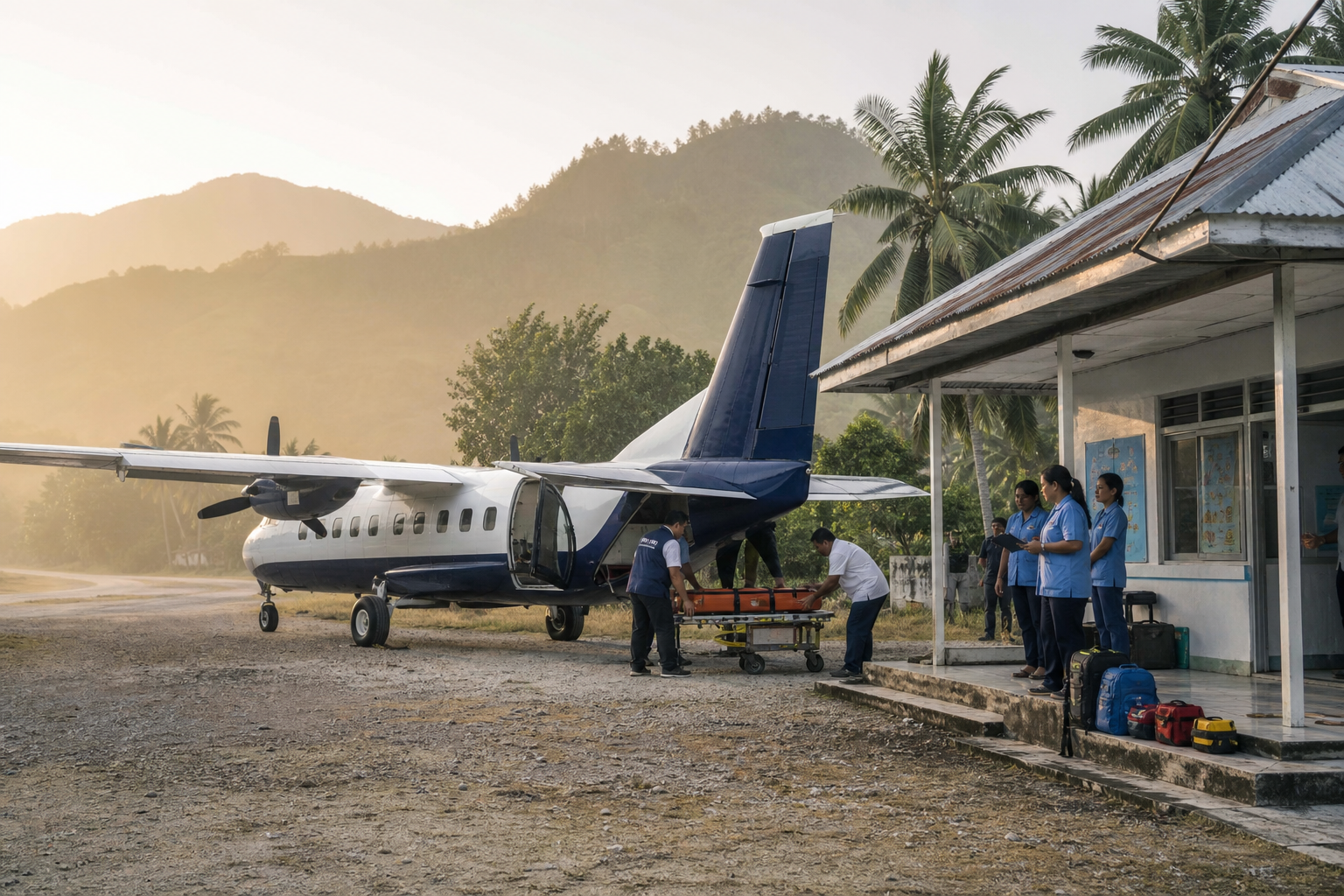
Indonesia is developing land and amphibious versions of the N219 aircraft as it explores a future flying-ambulance service for remote islands and communities.
BRIN said it is refining the aircraft ecosystem with state-owned manufacturer PT Dirgantara Indonesia. The N219 and planned N219A are designed for short take-off and landing, while the medical service remains a proposed use rather than an operating network. ANTARA News Agency
The programme matters because many Indonesian communities are separated by water or lack long runways. A locally supported aircraft could shorten medical transfers and create domestic aerospace maintenance and engineering work.
The same research programme includes an unmanned aircraft concept with a stated endurance of up to 24 hours and a range of up to 2,000 kilometres. Those figures are development goals until flight testing confirms them.
Readers should watch for certification milestones, medical cabin specifications, route partners and funded service trials. Those steps will determine whether the aircraft becomes practical health infrastructure.
An operating model would have to connect aircraft availability with hospitals, local governments, trained medical crews and airfields that can handle urgent transfers. Those links matter as much as the cabin design. A useful next step would be a funded pilot on named routes, with response times and patient outcomes reported before the concept is expanded.
The N219 is designed for short regional routes, which makes the idea relevant to islands and inland communities that face long transfers to specialist care. A medical version would still need an approved cabin layout, dependable maintenance and a clear payment model. Without those elements, the aircraft ecosystem remains a research and coordination project rather than an emergency service that communities can rely on.
Source note
ANTARA News reported the dated source facts. Plans and targets remain attributed and are not presented as completed outcomes.