
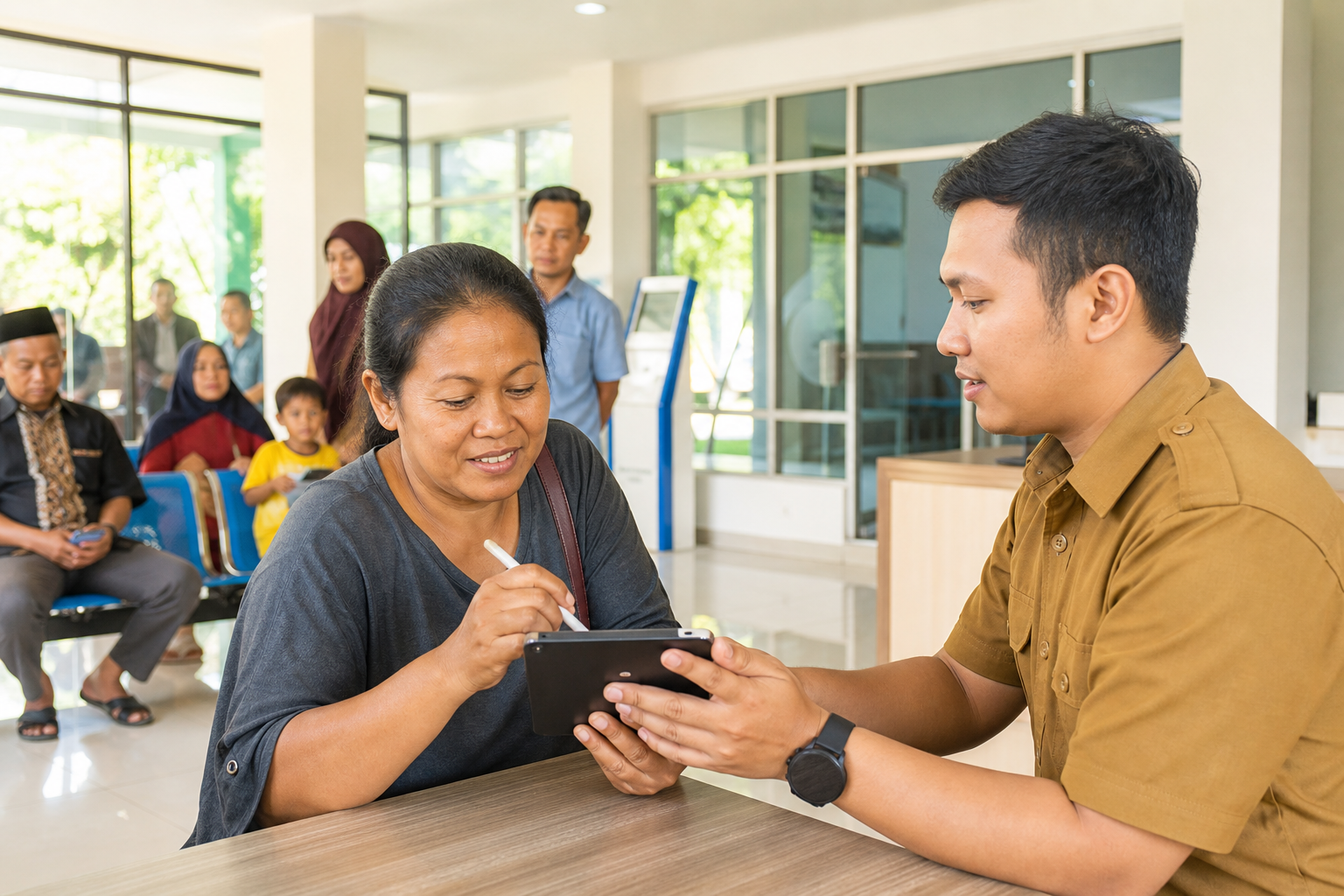
Indonesia says digital registration for two social-aid programmes is operating in 153 districts and cities across all 38 provinces, a public-service technology rollout intended to improve who receives support.
President Prabowo Subianto said the system covers the Family Hope Programme and Non-Cash Food Assistance. The government says digital registration should improve accuracy and transparency while reducing time and travel costs for low-income households. ANTARA News Agency
The significance is operational, not simply administrative. A reliable registration layer can reduce duplicate records, make eligibility decisions easier to audit and give local offices a clearer view of demand.
The rollout still has to prove that people without reliable devices, connectivity or documentation are not excluded. Data security, appeals and assisted registration will matter as much as the software itself.
The next test is measured delivery: error rates, processing time, successful appeals and evidence that benefits reach eligible households more consistently.
The rollout will be judged by whether residents can correct records easily and whether local offices can resolve cases without creating a new digital barrier. Clear appeals, assisted registration and published service standards would help show that the system improves access rather than simply moving paperwork online. Those operating results are not yet available.
Digital registration can improve public administration only if the underlying household records are accurate and agencies use the same verified information. The expansion therefore creates a test of data quality as well as access. Reporting on rejected applications, correction times and successful enrolments across districts would help residents and policymakers see whether the programme is reducing gaps in the social-aid system.
Source note
ANTARA News reported the dated source facts. Plans and targets remain attributed and are not presented as completed outcomes.