
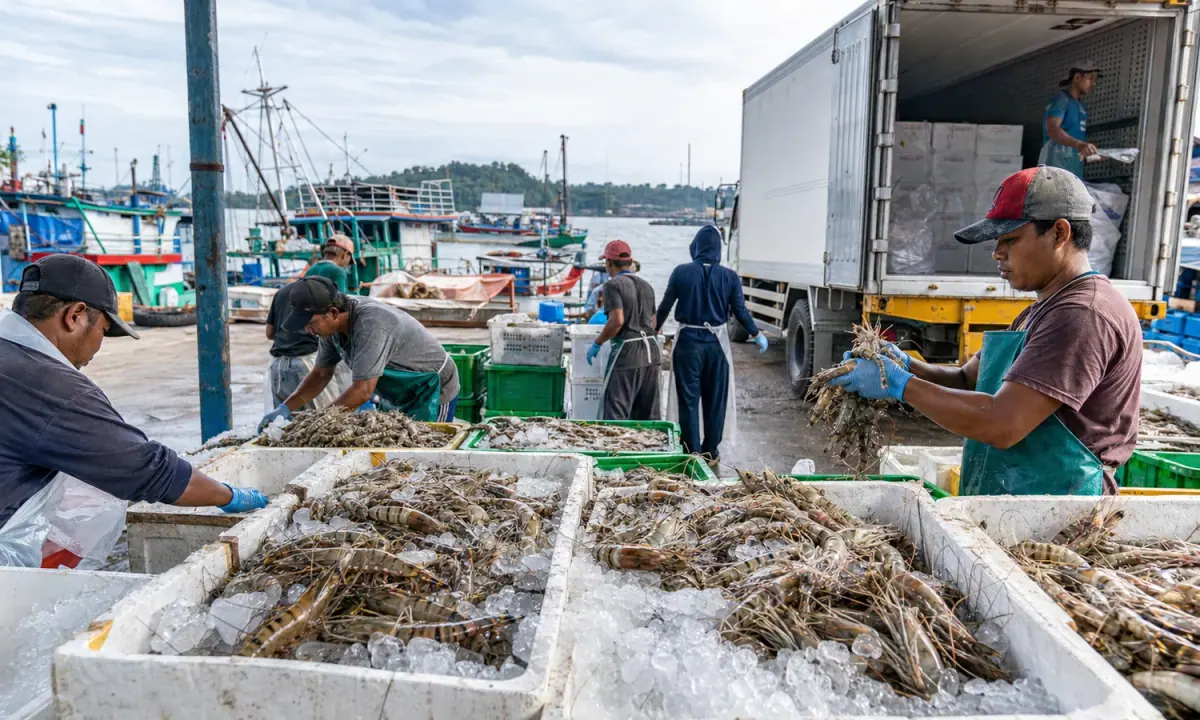
Indonesia is targeting an increase in the farmer-fisherman exchange rate, or NTN, from 103 to 120 by 2026, according to Coordinating Minister for Food Zulkifli Hasan during a visit to the development of the Red and White Fishermen’s Village in Kelongkong Hamlet, Central Lombok District, West Nusa Tenggara. The article says the visit took place on Friday, July 31, and frames the target as part of a broader government push to raise fishermen’s welfare. Hasan said fishermen are currently in a weaker position than other groups in the food sector. He stated that most fishermen are poorer than farmers or livestock breeders and described fishermen as “the poorest,” contrasting their exchange rate of 103 with rice farmers’ 131. The report places these remarks in the context of conditions he observed in NTB.
Hasan said the unfavorable situation for fishermen is visible in NTB, including in the two locations he visited: the Ekas Buana Fishermen’s Village in East Lombok and the Bilelando Fishermen’s Village in Central Lombok. As part of the effort to reach the 120 target, he said the government is building the Red and White Fishermen’s Village in NTB with integrated facilities. The listed facilities include cold storage shelters, a portable ice plant, a portable frozen warehouse, fish marketing kiosks, supply stores, a management office, a training center, and a dedicated fuel station for fishermen. According to Hasan, these facilities are intended to help fishermen secure better prices for their catch while reducing operational costs. ANTARA News Agency
The minister also said the new infrastructure is meant to improve how fishermen manage sales timing and distribution. He said fishermen will be able to preserve their catch when prices fall, which could reduce pressure to sell immediately at unfavorable rates. In addition, he said the fishermen’s village will be connected to a network of cooperatives across Indonesia, making it easier to market fresh catch. The article presents this cooperative linkage as part of the government’s practical approach to strengthening fishermen’s bargaining position, not only through physical infrastructure but also through market access.
Hasan linked the fishermen-focused measures to a wider shift in policy attention inside the food sector. He said the government is concentrating various programs on improving community welfare and is now turning its attention to fishermen because agriculture has already shown improvement. He added that rice farmers and livestock farmers are doing well and that the next focus should be fishermen. The minister expressed optimism that the target of raising fishermen’s NTN to 120 could be achieved soon. He also said the fishermen fuel station is expected to be completed by September, indicating that at least one key part of the planned support infrastructure is on a near-term construction timeline.
Source note
Read the official announcement for the underlying details.