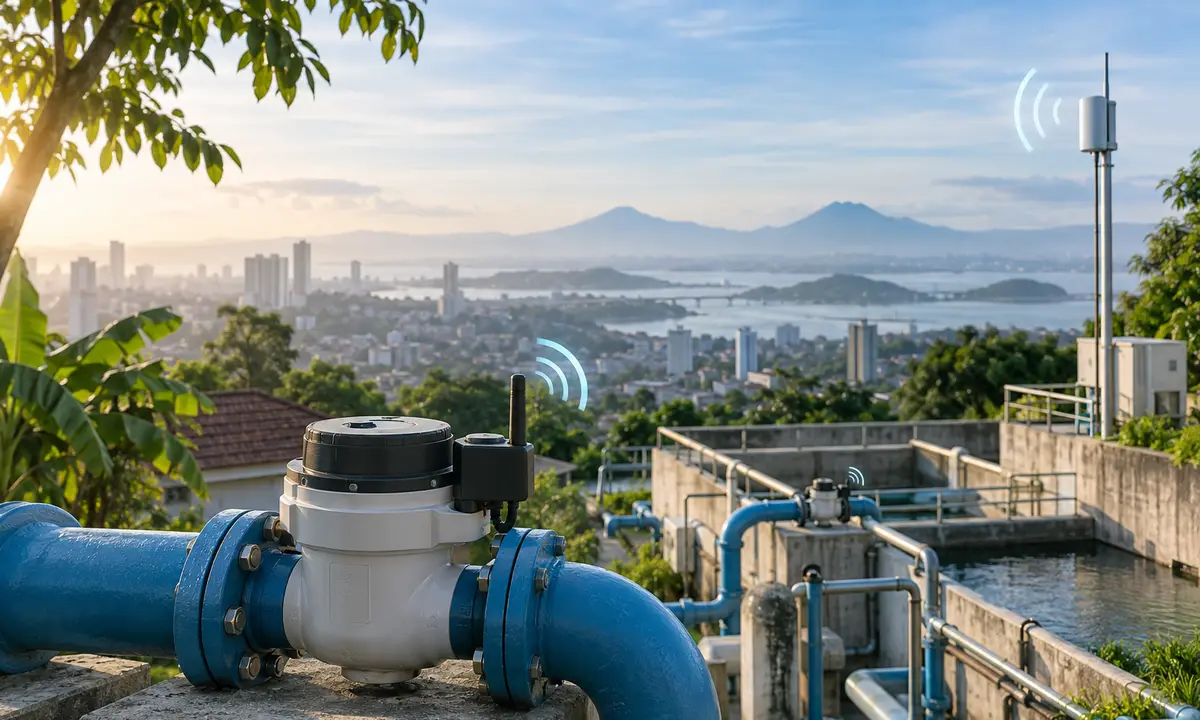
TEKTELIC Communications and PT IoT Kreasi Indonesia are collaborating on LoRaWAN connectivity intended to support water-meter monitoring applications across Indonesia.
What the announcement says
The companies said the arrangement combines TEKTELIC’s carrier-grade gateway infrastructure and technical expertise with IoT Kreasi Indonesia’s local deployment capability and knowledge of the utility market.
TEKTELIC described the work as supporting a one-million-water-meter initiative. That is a project scope stated by the issuer, not evidence that one million meters have been installed, connected or put into operation.
What remains to be established
The announcement says the collaboration is designed to provide scalable connectivity for sensors and support future utility deployments. It does not identify a completed rollout, customer acceptance milestone or operating coverage map.
Why it matters
LoRaWAN is a low-power wide-area networking approach used to connect devices that send relatively small amounts of data over long distances. In water metering, it can help move readings from distributed meters to systems used by utilities.
Remote readings can reduce manual collection work and give utilities more timely visibility into consumption or abnormal use. Those benefits depend on reliable installation, network planning, data integration and day-to-day operations. Utilities would also need to test radio coverage across dense urban areas and remote service zones, confirm how meter data enters billing and operational systems, and assign responsibility for device maintenance and cybersecurity. The announcement provides no commercial terms, pilot results or deployment schedule, leaving those operating questions open. Implementation would also require choices about meter hardware, battery life, network ownership, data retention and integration with existing utility platforms. Those decisions shape both cost and accountability. The partnership announcement establishes the proposed technology and local delivery roles, while utilities will determine whether those arrangements fit procurement and operating requirements.
TEKTELIC highlighted gateway performance, interference management and local radio conditions as important parts of the planned work. IoT Kreasi Indonesia brings an in-country team spanning hardware, software platforms, API integration and data logging.
The two companies are presenting their solutions at Water Indonesia 2026 in Jakarta from 9 to 12 September. Event participation demonstrates commercial engagement, but not deployment completion.
For Indonesian utilities, the announcement adds a potential connectivity route for digital metering. Procurement decisions still require evidence on coverage, security, device compatibility, service responsibility and total operating cost.
For technology suppliers, the initiative shows how international network infrastructure may be paired with local integration capability. The partnership model can be important in a market where deployment conditions vary across geography and utility systems.
The companies also said their broader collaboration may support smart buildings, industrial IoT and connected infrastructure. Those adjacent uses are intentions and should be assessed separately from the water-meter initiative.
The immediate business signal is therefore a supplier partnership around a named utility use case and a large intended scope. Evidence of progress will include contracted utility projects, installed devices and verified network performance.
Source note
SEA Connect based this report on TEKTELIC’s 8 September announcement. The one-million-meter figure is attributed to TEKTELIC and is not presented as a completed deployment.