
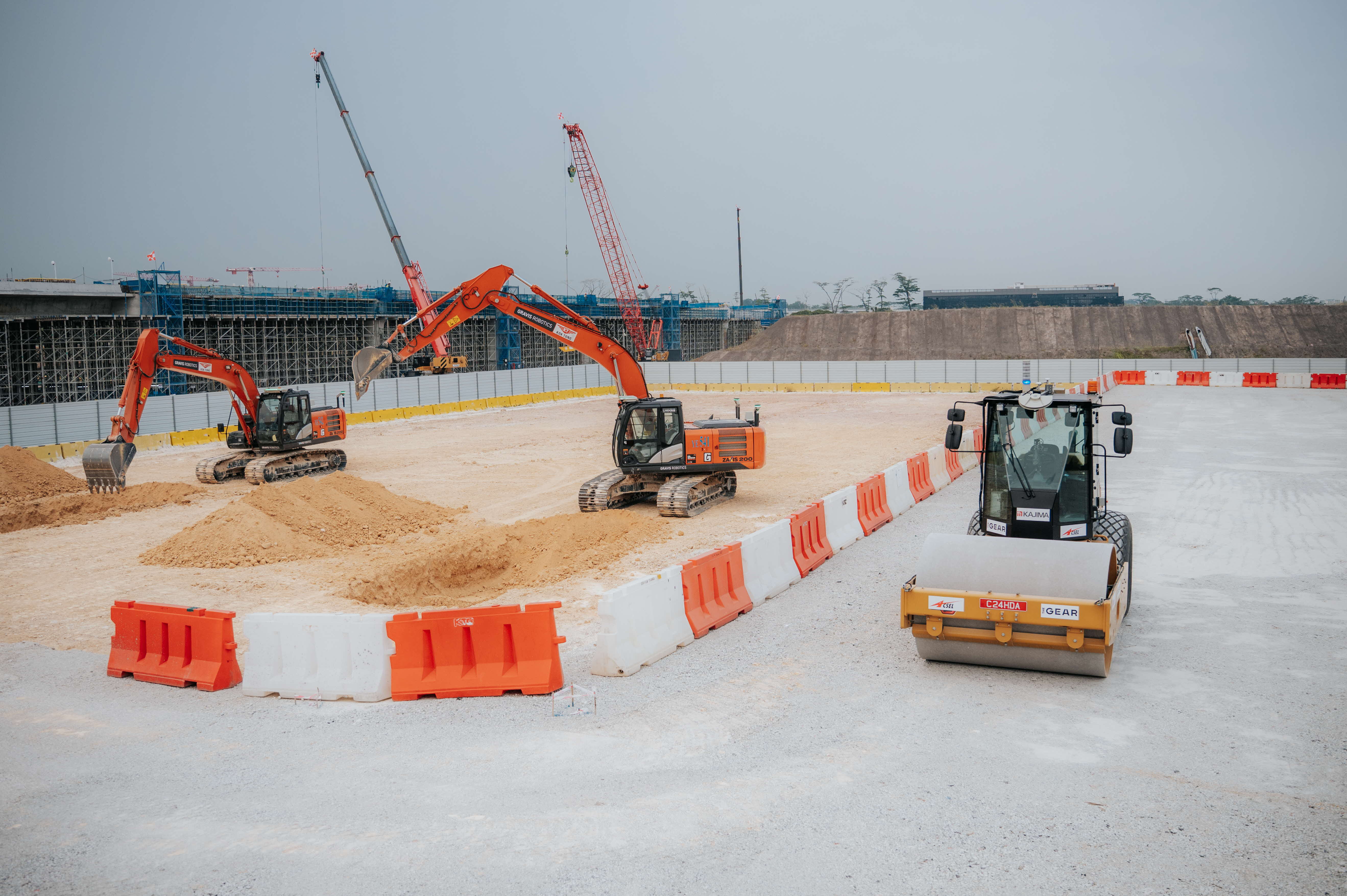
JTC and Kajima say they have begun a pilot of autonomous construction technology in Singapore. JTC says the trial targets a 50 per cent reduction in operator manpower, with one operator overseeing two machines. That is a target for the pilot rather than a measured productivity result already achieved across the sector.
A pilot at Jurong Innovation District
The announcement describes a collaboration between JTC and Kajima Singapore to test autonomous construction methods at Jurong Innovation District. JTC identifies the work as a pilot that brings together a public-sector development body, a construction company and technology partners. The practical significance is the test environment: construction organisations are examining where automation can operate alongside existing project planning, site safety and workforce processes.
JTC says the pilot will use an autonomous excavator and autonomous roller, supported by a digital site-management system. The release describes these as equipment and processes being trialled, not as a construction method already adopted across Singapore projects. It does not provide a schedule for broader rollout, a total project count or an operating result from the equipment. Those distinctions matter when assessing a pilot involving emerging site technology.
What the productivity target means
JTC's reference is to reducing operator manpower by half, with one operator overseeing two machines. It should be read as a target for the pilot, not as a measured productivity improvement. The source does not establish that the target has been delivered, that it will be replicated on other projects, or that autonomous equipment can replace every worksite role. Results will depend on the tasks selected, site conditions and the safety and operating model used in the trial.
What it could test
For construction and built-environment operators, the experiment is a useful signal of where applied autonomy may move next: tasks that can be planned around machines, digital site information and human supervision. The source links the pilot to work on a live construction site. It does not remove the need for evidence on reliability, workforce design, project cost, site safety and regulatory compliance. Nor does it state that the technology is suitable for every task or site condition.
The pilot also gives readers a clear distinction between an operational trial and a sector-wide transformation. A named machine operating under a defined pilot can provide useful evidence, but wider adoption would require separate decisions by project owners, contractors and regulators. JTC says that, if the pilot succeeds, it plans to deploy autonomous heavy construction equipment across suitable projects in its pipeline and support wider industry adoption. That is a conditional pipeline statement, not a current procurement mandate or an industry standard.
What to watch next
JTC and Kajima also say they will explore extending the trial to autonomous bulldozers and dump trucks in 2027, with the aim of creating a coordinated fleet. The next meaningful disclosure would therefore include the expanded trials, safety findings, operator-manpower results and any decision on suitable pipeline projects. Until then, the source supports a Singapore pilot and conditional expansion plans, not a completed autonomous-construction transformation or a proven industry-wide outcome.