
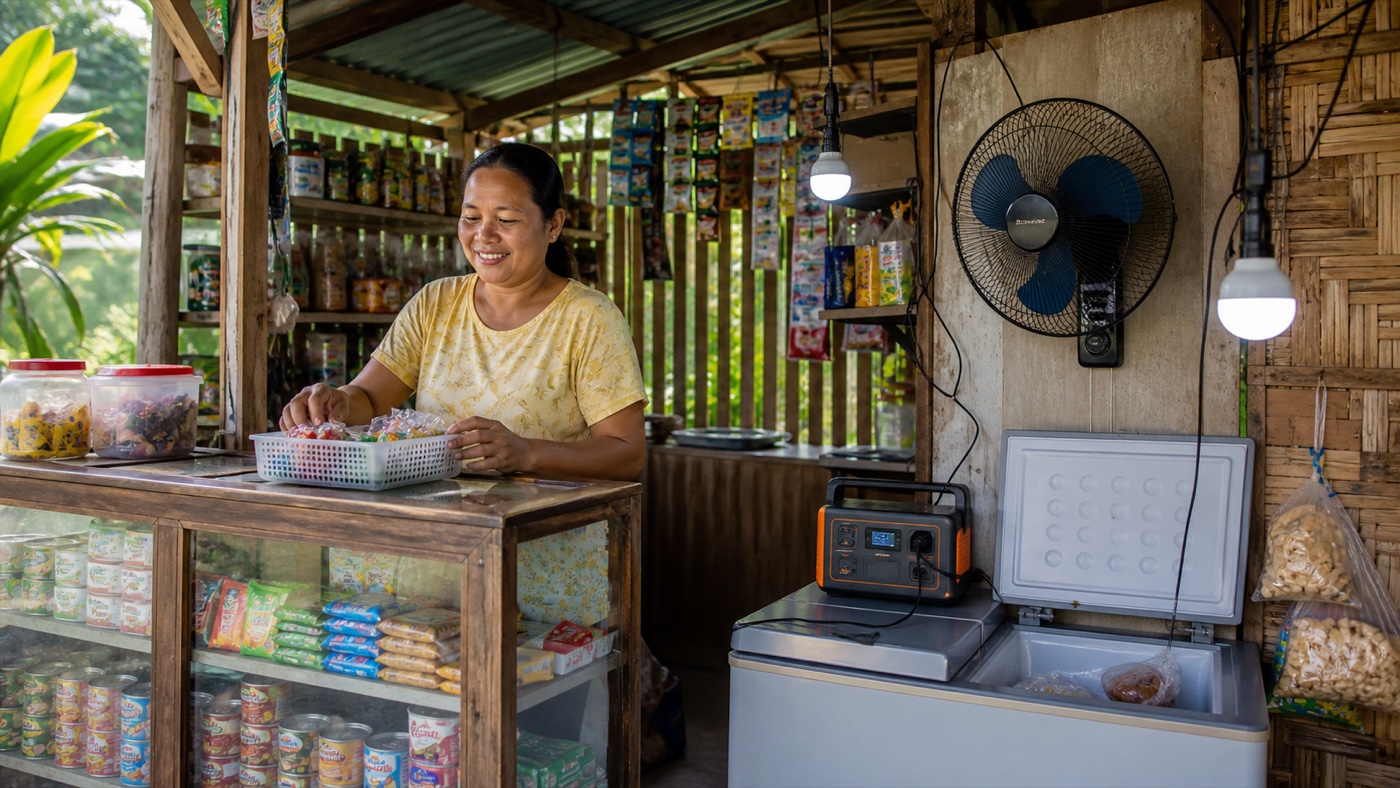
Pampanga-based Lumio Solar has raised US$900,000 in pre-seed funding to expand solar-powered appliances and the distribution network needed to support them across the Philippines.
The round was led by climate venture builder 100×100. Lumio plans to build product, hub and after-sales capacity, beginning in Central Luzon and Metro Manila before moving into provincial and archipelagic markets.
Its approach shifts the entry point for household solar away from a full rooftop installation. The current range includes solar-powered fans, lights, freezers and portable power stations that require little or no installation.
That matters in a market where many households rent, lack suitable roof space or cannot absorb the upfront cost of a complete system. Small shops, farms and institutions may also value an appliance that solves one operating problem without requiring a property-scale project.
The difficult part is distribution and service rather than hardware alone. Equipment must reach customers outside major cities, perform in local conditions and remain repairable. Lumio’s investment in hubs and after-sales support is therefore central to whether the model can scale.
Useful next evidence would include unit economics, warranty performance, financing terms, repeat purchases and verified savings for households and microbusinesses.
The product model could widen the addressable market because it separates energy adoption into smaller decisions. A shop owner may start with refrigeration or lighting instead of financing a complete installation. If the first product performs reliably, the relationship can expand through additional appliances or storage.
Financing will still shape access. Even a smaller device can remain unaffordable if customers must pay upfront, while weak credit terms can erase part of the energy saving. Transparent repayment schedules, warranties and service response times will therefore matter as much as the advertised operating cost.
There is also a regional angle. Dense cities, rented homes and dispersed island communities are common across Southeast Asia. A Philippine distribution model that handles maintenance and last-mile logistics could provide a useful operating template for other markets with similar constraints.
The strongest outcome would be a network that lowers the practical risk of buying unfamiliar energy equipment. Customers need to know where a device can be repaired, how long parts will take and whether savings continue after the first year.
Product standards are another important part of the market. Appliances combine batteries, panels, electronics and household use, so buyers need credible information about durability, electrical safety and end-of-life handling. Clear specifications will help distinguish long-lived equipment from short-term novelty products.
For investors, the round is an early bet on distribution infrastructure. Revenue growth will depend on repeatable local sales and service rather than a few large projects. That makes hub productivity, technician coverage and customer referrals useful operating measures to watch.
What we checked
The funding was reported by multiple credible media reports.