
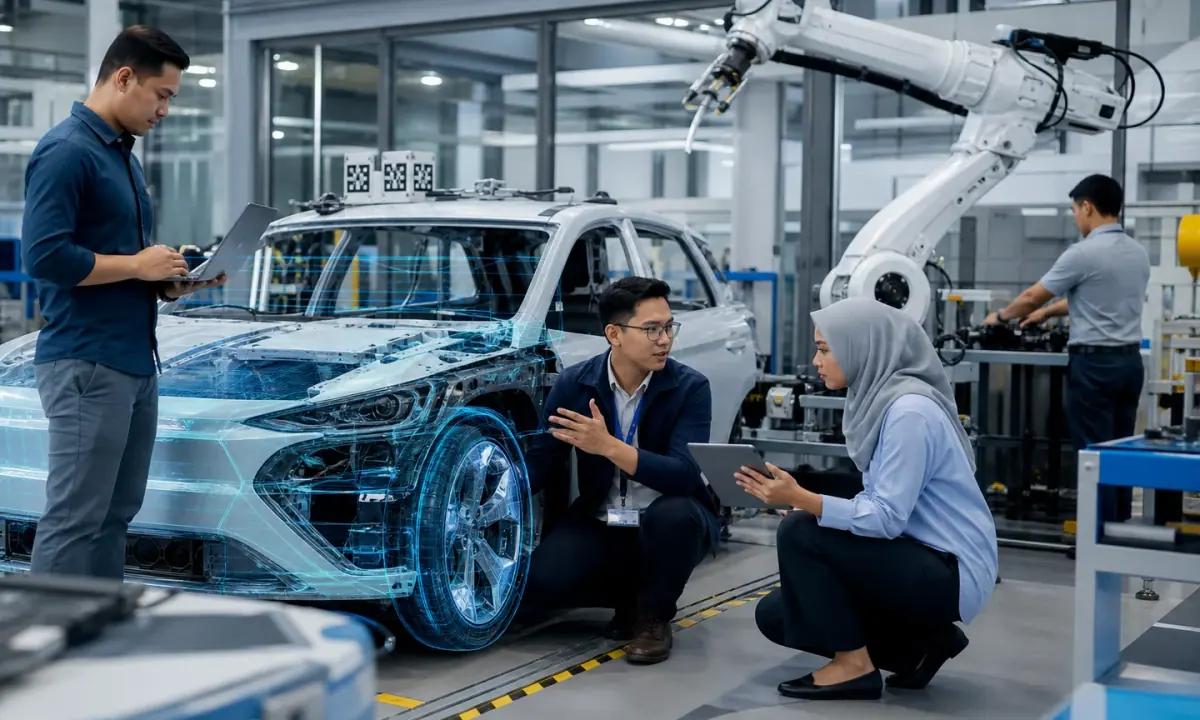
Malaysia is placing vehicle software and artificial intelligence inside a broader industrial strategy rather than treating them as stand-alone technology themes. The GATE Conference 2026 opened in Kuala Lumpur on 26 August with an agenda spanning software-defined vehicles, smart manufacturing, electric-vehicle infrastructure, supply-chain localisation and investment competitiveness.
The conference is co-hosted by the Malaysian Investment Development Authority and the Malaysia Automotive, Robotics and IoT Institute. Its programme brings government, manufacturers, technology providers and industry specialists into the same discussion. That mix matters because modern vehicle programmes depend on policy, capital, software, electronics, validation and manufacturing capability moving together. MIDA
Software-defined vehicles change where value is created in the automotive chain. More functions can be developed, updated and improved through software, while sensors, power electronics and compute become more important to performance and safety. For Malaysia, the opportunity is not limited to assembling vehicles. It includes engineering, embedded systems, testing, electronics and services that can support regional production platforms.
The agenda also connects digital capability with localisation. Regional supply chains have to balance resilience with scale, and localisation only creates durable value when domestic suppliers can meet demanding quality, cost and technology requirements. Smart-manufacturing investment can help firms reach those standards, but it requires skills, equipment and sustained customer programmes rather than one-off demonstrations.
Electric-vehicle charging and power electronics add another layer. Infrastructure rollout shapes consumer adoption, while component capability shapes the industrial opportunity. Treating charging, software, electronics and manufacturing as one system can help policymakers identify dependencies that are easy to miss when initiatives are managed separately.
A conference is a signal of priorities, not evidence that industrial transformation has occurred. The useful outcomes will be investable projects, supplier-development commitments, engineering programmes, validation facilities and commercial partnerships with measurable timelines. Claims about becoming an automotive powerhouse should therefore be tested against execution after the event.
The regional relevance is clear. Southeast Asian countries are competing for investment while their automotive supply chains remain interconnected. Malaysia can strengthen its position if it combines manufacturing depth with software and electronics capability that serves multiple regional markets. The next evidence to watch is whether the discussions produce named programmes and deployments that move local firms higher in the mobility value chain.
Talent is another binding constraint. Software-defined mobility requires engineers who can work across embedded software, electronics, cybersecurity, data and functional safety. Training programmes will have more value when they are linked to real vehicle platforms and supplier projects, allowing engineers to build evidence of deployment rather than only classroom credentials.
Standards and validation will shape whether Malaysian capability travels. Components and software need to meet requirements across vehicle programmes and export markets. Shared testing facilities, industry-grade datasets and recognised assurance processes could therefore be as important as incentives for new factories. They help local suppliers prove reliability to customers that cannot absorb avoidable safety or integration risk.
What we checked
Malaysian Investment Development Authority: GATE Conference 2026.