
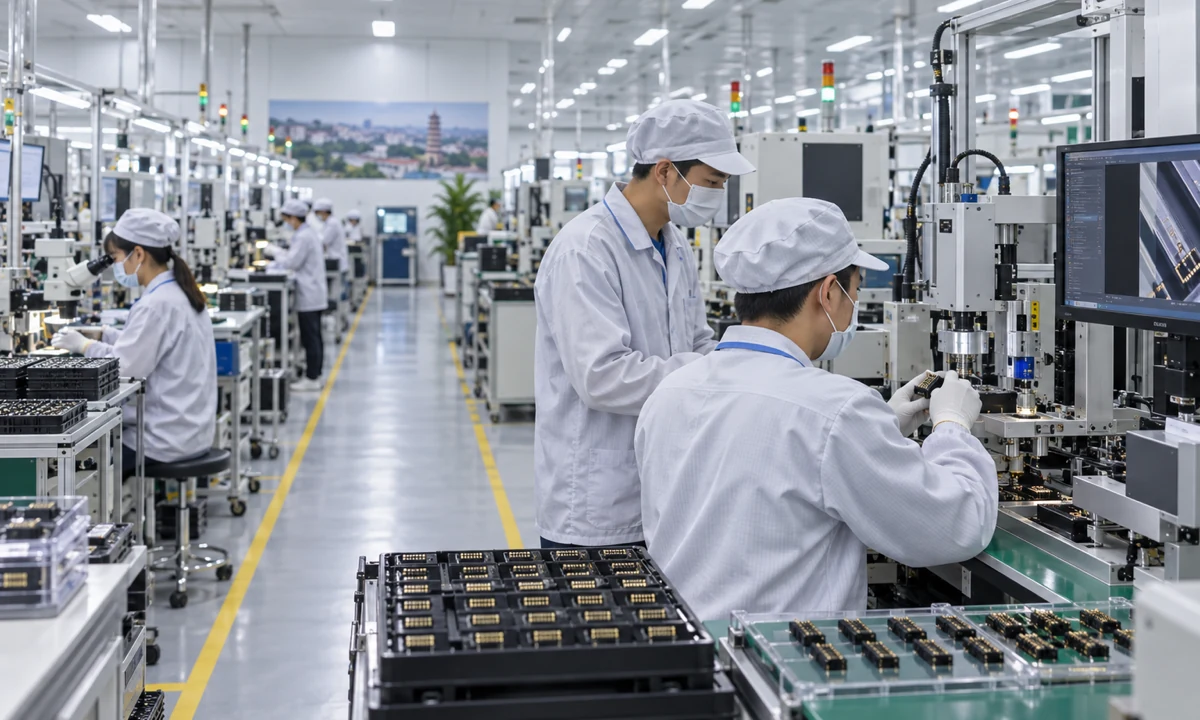
Molex has marked completion of the initial building phase at its expanded manufacturing plant in Hung Yen, adding production, engineering and quality-assurance capacity for high-speed data-centre customers. The company says the site is its second in Vietnam and forms part of a longer-term expansion of its electronics manufacturing base.
The new facility is located in Thang Long Industrial Park II. Molex describes it as a 250,000-square-metre site, though its release does not break out how much floor space is already operational or how production will be phased across the wider campus. That distinction matters because the announcement marks completion of an initial building phase rather than a disclosure that every planned line is running at full capacity.
The company says the Hung Yen operation employs nearly 5,000 people and is expected to reach 8,000 by the end of 2026. It also says the broader investment will add more than 10,000 high-tech manufacturing jobs. Those figures describe company plans and should be read separately from verified hiring completed to date.
What the announcement establishes
The plant is intended to support customers building high-speed data-centre systems. In practice, that puts the Vietnam operation inside a supply chain where connector reliability, production yield and quality control matter as much as headline factory area. Molex says the site combines manufacturing with engineering and quality-assurance functions, which could allow more work to be handled locally as programmes move from qualification into volume production.
For Vietnam, the announcement is a manufacturing-capability signal rather than simply a property expansion. Electronics suppliers are being asked to support denser computing systems and faster data links, while customers also want regional capacity that can manage engineering changes and quality requirements. A site that combines production and technical functions can be more useful than one limited to final assembly, although Molex has not disclosed the product mix, customer allocation or output volume for Hung Yen.
The release also highlights energy-efficient building design and employee amenities. Those features may affect operating costs and recruitment, but the company did not publish energy-use targets, renewable-power sourcing or independently audited environmental results for the new phase. They therefore remain design features rather than measured sustainability outcomes.
What to watch next
The next evidence will be operational: which connector and cable programmes are assigned to Hung Yen, how quickly the workforce target is reached, and whether the plant secures named data-centre platform programmes. Customer qualifications, production volumes and export destinations would show how much of the announced capacity is translating into regional manufacturing activity.
Molex’s expansion reinforces Vietnam’s role in the data-centre hardware supply chain, but it does not by itself establish the scale of demand or utilisation at the facility. The useful near-term test is whether the plant moves from opening-phase capacity into sustained production supported by disclosed hiring, customer and output milestones.
The scale figures also need careful reading. The 250,000-square-metre description applies to the site identified in the release, while the employment targets span a ramp-up that is still under way. Disclosures on commissioned production lines, utilisation and completed recruitment would make the expansion easier to compare with other electronics investments in Vietnam.
Source note
SEA Connect based this report on Molex’s public announcement. Company targets, forecasts and planned milestones remain attributed disclosures unless independently verified.