
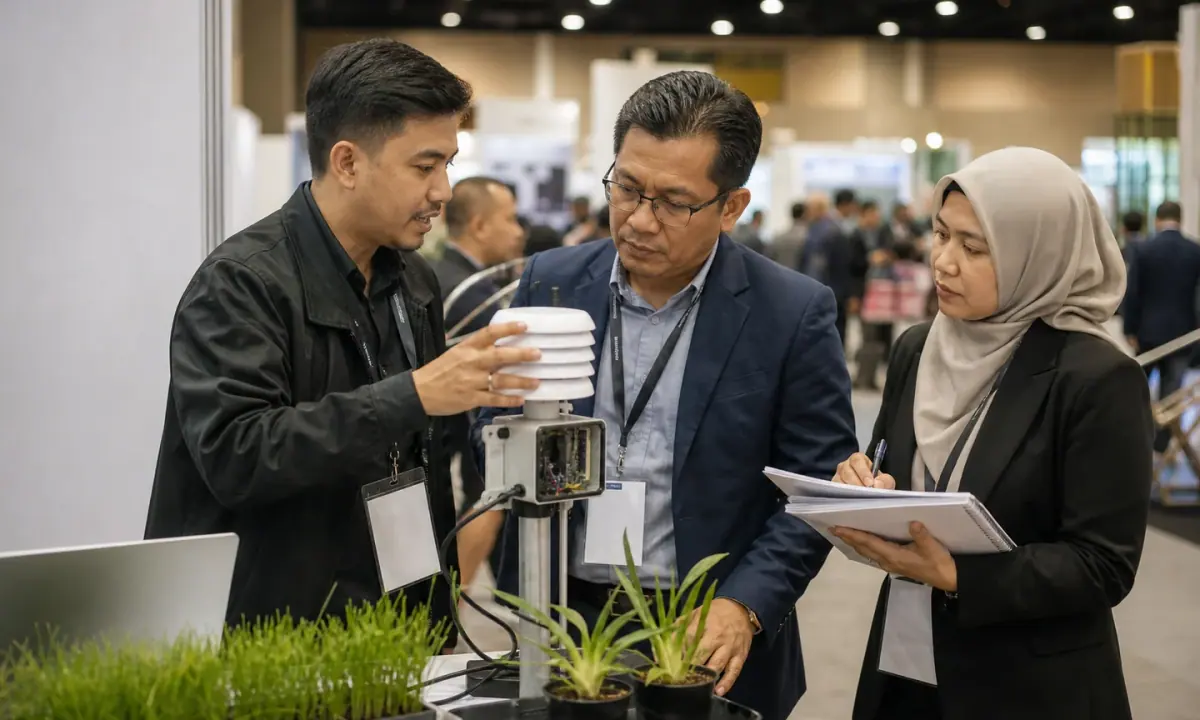
Malaysia's National Innovation and Commercialisation Expo opened at the Kuala Lumpur Convention Centre on Wednesday with a programme that puts business matching and startup pitching alongside three days of technology and policy sessions.
The event, known as NICE 2026, is organised under the Ministry of Science, Technology and Innovation. Its published agenda shows business matching on every day, pitching sessions led by Cradle on Wednesday and Thursday, and exhibition participation from Malaysia Commercialisation Year communities, MRANTI, MTDC, Bioeconomy Corporation, universities and an Innovation Arena. MOSTI MOSTI MOSTI
The format matters because commercialisation is not a final step added after research. A technology team must find a user problem, establish who will pay, understand integration and regulatory requirements, and decide whether licensing, procurement, investment or a new company is the right route. Putting those conversations beside the exhibits creates an opportunity to test assumptions while the people who control different parts of the path are in one place.
Wednesday's main conference theme, led by MIGHT and MIMOS, is “The Future We Must Build: Powered by Technology.” The day's published sessions include future industries for ASEAN and the data economy's path from insight to commercial impact.
Thursday shifts towards bioeconomy, health and national resilience, with the formal opening scheduled for that day. Friday is led by MRANTI under the theme “Scaling Malaysian Innovation to the World.” This sequence moves from national technology choices to sector applications and then to international commercialisation.
The agenda is evidence that these questions are being convened, not evidence that they have been resolved. A pitching slot does not demonstrate investment. Business matching does not establish a sale. An exhibition is separate from demonstrated product-market fit. Those distinctions are especially important for public innovation programmes, where attendance and activity counts can be easier to report than licensing income, export customers or repeat procurement.
The strongest follow-up evidence would be specific and attributable: named technologies entering customer trials, licensing agreements, investments with disclosed amounts, procurement decisions, or Malaysian companies gaining customers outside the country. It would also show which institution owns the next step and when progress will be assessed.
NICE's design gives several organisations a role. Cradle's pitching programme addresses venture formation and capital. MRANTI's Friday theme focuses on scaling. MIGHT and MIMOS frame technology priorities, while the business-matching programme is intended to connect supply with demand. The risk is that a promising project moves between institutions without a single accountable commercial owner. The opportunity is that the event makes those handoffs visible enough to resolve.
NICE 2026 opened on 26 August and continues until 28 August. Participants still have two days to use the agenda, matching sessions and institutional mix. For regional investors and enterprise partners, the event is a current map of where Malaysia is concentrating commercialisation effort, but the quality of that signal will be determined by documented deals and trials after the expo.
What we checked
Ministry of Science, Technology and Innovation (MOSTI); Malaysian Science and Technology Information Centre (MASTIC); NICE 2026.
Illustrative SEA Connect generated editorial artwork; not a documentary photograph of NICE 2026 or its participants.