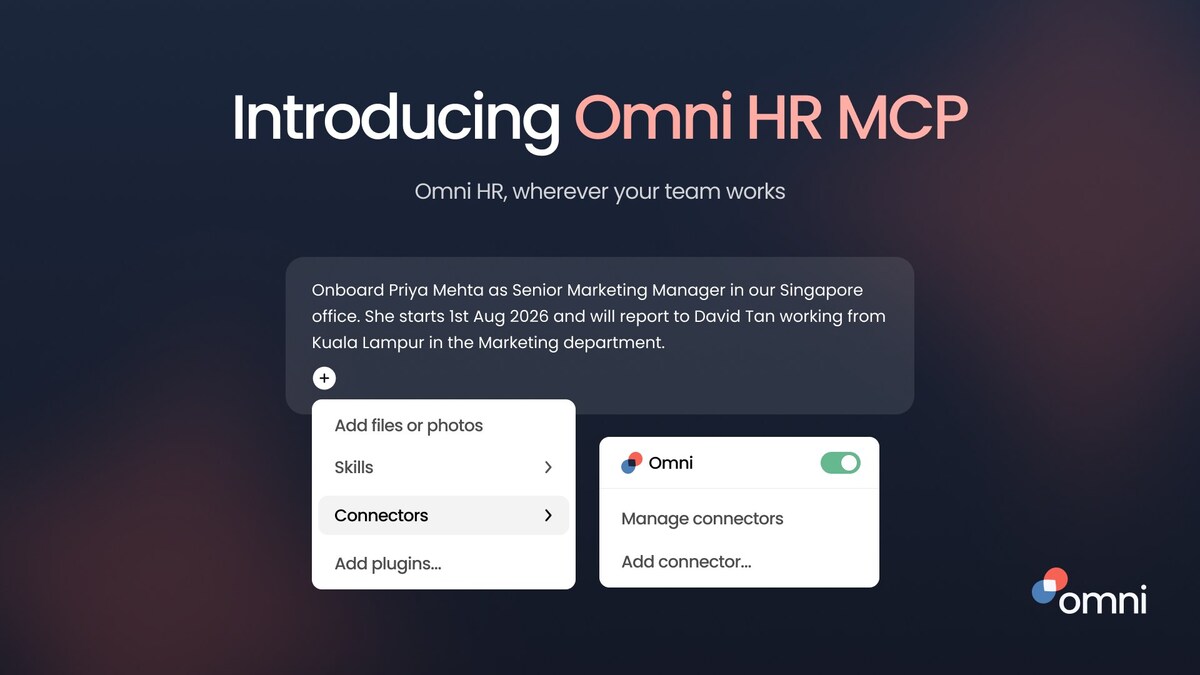
Omni HR has launched a native Model Context Protocol integration that allows AI assistants to work with live HR data while keeping actions scoped to each user’s existing permissions.
The Singapore-based HR platform said the integration is designed for assistants such as Claude, ChatGPT and Cursor, with no HR data stored at the connector level. That access-control point is the commercial substance of the release: the pitch is not just “AI in HR”, but AI that can reach operational data without creating a second, looser data layer. Omni HR PR Newswire release
For HR teams across Asia, this is where the next buying conversation is moving. Payroll, leave, headcount and employee lifecycle data are high-sensitivity workflows. AI tools are useful only if they can answer questions or trigger actions without weakening auditability, permissions and privacy controls.
Why it matters
Omni’s announcement points to a broader shift in enterprise software. Vendors are trying to make AI assistants operational rather than peripheral: instead of copying data into a prompt window, the assistant connects to governed systems and acts within existing business rules.
The release also connects the MCP integration to Mino, Omni’s AI agent inside its own platform. That gives the company two routes into AI-enabled HR work: an in-product assistant and an external-assistant connector. The useful market signal is that Asian HR software buyers may increasingly ask whether AI features respect local data-protection expectations and company permission models.
What to watch next
The next marker is adoption, not announcement language. Buyers should watch whether early-access customers use the connector for routine HR questions only, or whether it becomes part of higher-risk workflows such as profile updates, compliance reporting and cross-country payroll operations.
Source note
This brief is based on Omni HR’s PR Newswire release. SEA Connect has not independently verified customer adoption or product performance claims beyond the source material.