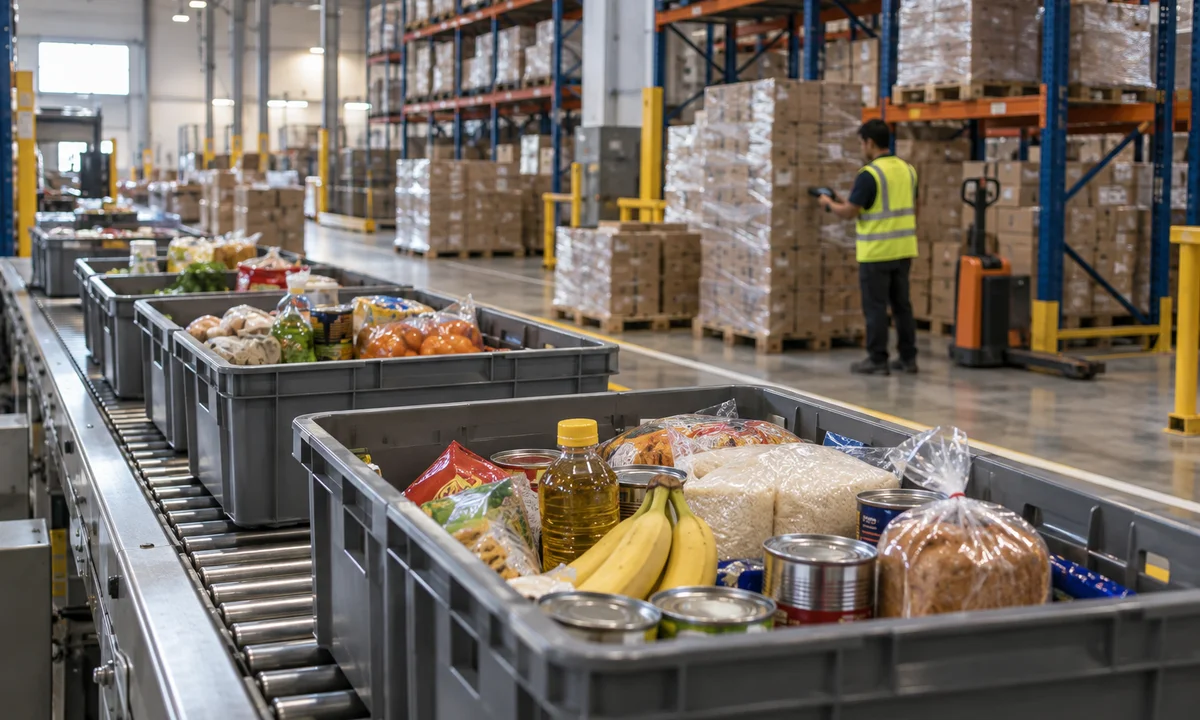
Planning stock for Philippine Seven’s distribution network is moving towards automated forecasting and replenishment. The operator of 7-Eleven stores in the Philippines has selected RELEX Solutions for a programme covering 27 distribution centres, with implementation partner genieX providing project management, consultancy and local expertise.
A change in the planning process
RELEX announced the customer relationship on 14 September. Its software will replace spreadsheet-based planning with recommendations intended to improve supplier collaboration and stock availability. The scope puts the focus on the distribution network that supports the retailer’s stores, rather than a consumer-facing app or a new store format.
The announcement describes Philippine Seven as already using the technology, while also referring to future implementation and ongoing support. It does not identify how many centres have completed the transition or provide a date for the entire programme. The disclosed scope is therefore 27 centres; a completed rollout across all of them has not been established.
Demand forecasting estimates what products will be needed, while replenishment translates that demand into stock decisions. RELEX says its system uses multiple data sources and accounts for seasonality and local variation. Those features are intended to help planners respond to changing demand without relying solely on manually maintained spreadsheets.
Why the distribution layer matters
In convenience retail, a planning error can travel through several stages before it reaches a shelf. A distribution centre may hold too much of a slow-moving product while a store waits for a faster-selling one. Better information can help planners identify those imbalances, although software recommendations still depend on the quality of the data and on practical delivery constraints.
For Philippine Seven, the programme creates a common planning approach across a substantial distribution network. For suppliers, changes in ordering patterns and forecast visibility can affect production and delivery planning. Those are potential operating consequences of the system’s role, rather than measured results from this implementation.
The involvement of genieX adds local implementation support to the technology supply. That matters because moving away from spreadsheets involves more than installing software: product records, ordering rules and planning responsibilities have to work together. The release names the partner’s role but does not disclose the project’s cost, implementation timetable or detailed integration scope.
Results remain to be measured
RELEX describes higher fill rates and greater efficiency as objectives, but the announcement contains no before-and-after inventory figures, forecast-accuracy results or savings data for Philippine Seven. It also does not quantify a reduction in manual planning work. These remain intended benefits rather than demonstrated outcomes.
The distinction is important for other Southeast Asian retailers evaluating similar systems. A named adoption with a defined network scope provides evidence of a commercial technology decision. It does not establish how quickly the customer will recover its investment, whether every location will use the same configuration or how much performance will improve.
Philippine Seven’s next operating challenge is converting that decision into consistent planning across its centres and suppliers. The announcement establishes the parties and the scale of the intended programme. Its longer-term importance will rest on reliable stock decisions, effective local implementation and results measured against the retailer’s previous processes.
Source note
Based on RELEX Solutions’ 14 September 2026 announcement and its PR Newswire distribution. Both are the same issuer source. The report distinguishes the programme’s stated scope from completed rollout and measured benefits.