
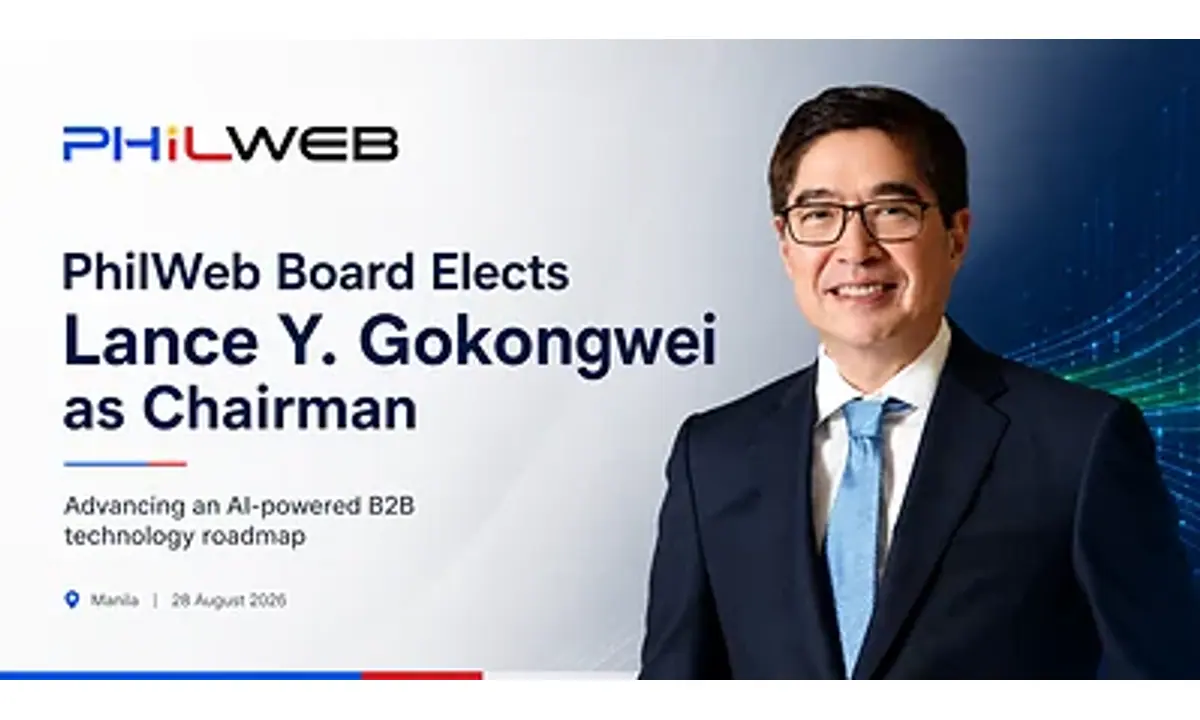
PhilWeb has elected Lance Y. Gokongwei as chairman, placing the Philippine conglomerate executive in charge of the listed technology company after his recent P2.02 billion strategic equity investment. The appointment follows his entry to PhilWeb’s board in July and completes a governance transition that the company links to its next phase of expansion.
The immediate business change is at board level, but PhilWeb is presenting the appointment as part of a broader shift in how it develops and sells technology. The company says it is moving from raising cross-border capital to executing an enterprise technology programme focused on regulated digital operations. PhilWeb via PR Newswire
PhilWeb’s announced product direction covers real-time operational monitoring, algorithmic risk management, regulatory compliance automation, anti-fraud detection and customer-lifecycle analysis. These are company plans rather than independently measured deployment outcomes, and the announcement does not provide customer counts, implementation dates or revenue forecasts for the new capabilities.
Gokongwei said the objective is to deploy AI-powered infrastructure for security and compliance across regulated digital businesses. PhilWeb president Brian Ng said the company intends to apply that infrastructure to the backend requirements of commercial tourism complexes and multinational platform providers. The announcement does not identify those prospective customers.
The governance context matters because PhilWeb is listed on the Philippine Stock Exchange and operates technology for regulated digital ecosystems. A chairman backed by a substantial equity investment can influence capital allocation, partner selection and the pace at which product plans move into commercial deployments.
The five capability areas named by PhilWeb address different parts of a regulated operator’s technology stack. Monitoring is about detecting operational changes as they happen. Risk management and fraud detection concern how unusual activity is identified. Compliance automation concerns the records and checks needed to operate under licensing requirements. Customer analysis sits closer to commercial performance. Bringing those functions together would require more than a single AI model; it would involve data access, system integration and accountable operating controls.
The announcement also separates the confirmed transaction from the forward plan. Gokongwei’s investment and chairmanship are completed corporate actions. The AI-enabled infrastructure programme is a stated direction whose scope and economics have not yet been disclosed. Readers should therefore distinguish the governance change from the company’s expectations about what it may enable.
For the Philippine technology market, the development is a test of whether established conglomerate capital can help a listed platform company build higher-value enterprise software rather than remain concentrated in existing operations. The strongest evidence will come from named deployments, disclosed customers and financial results tied to the new systems.
PhilWeb describes itself as a provider of digital infrastructure, operational systems and platform technology for licensed operators in the Philippines. Its August 28 announcement establishes the leadership change and planned technical focus, but it does not establish that the proposed AI systems have already reached broad commercial scale.
What we checked
Image credit: PhilWeb.