
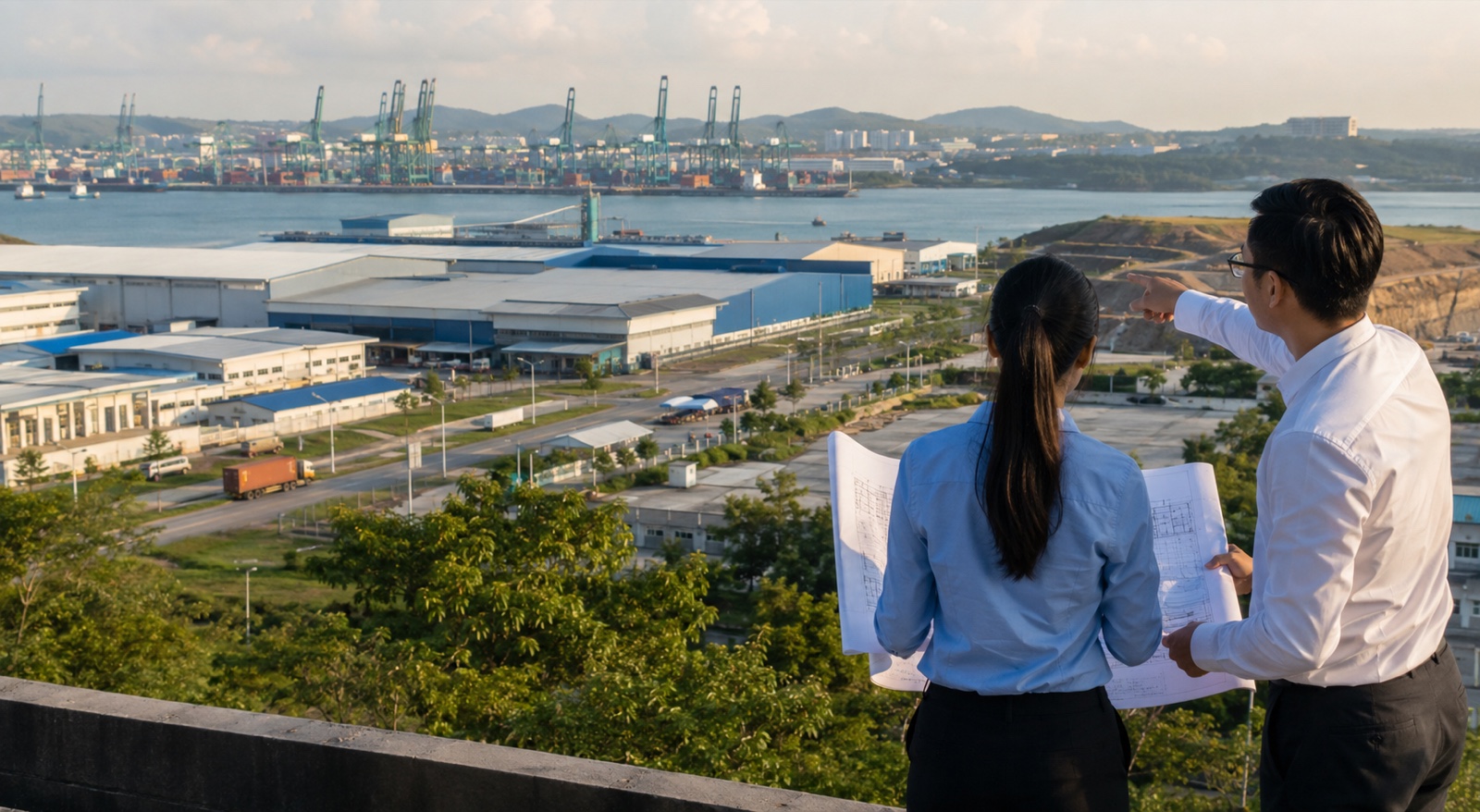
Singapore Minister of State Zhulkarnain Abdul Rahim is visiting Batam on 3 and 4 September, with an itinerary that includes meetings with the Riau Islands leadership and visits to industrial parks. The programme is a modest but current signal of continuing attention to the commercial links between Singapore and its closest Indonesian industrial neighbour.
The visit does not announce a signed investment or new project. Its significance lies in the institutions and locations involved. Zhulkarnain is scheduled to meet Riau Islands Vice Governor Nyanyang Haris Pratamura, Batam Mayor and BP Batam Chairman Amsakar Achmad, and Batam Vice Mayor and BP Batam Vice Chairperson Li Claudia Chandra.
He will also visit industrial parks and meet students and faculty at Batam Tourism Polytechnic. Officials from Singapore's Ministry of Foreign Affairs and Ministry of Trade and Industry are accompanying him, giving the programme an economic component alongside its diplomatic purpose.
Batam has long served as a production and logistics extension of Singapore. Its industrial parks, port links and proximity allow manufacturers and service providers to combine Singapore-based management, financing and regional connectivity with Indonesian land, labour and operating capacity. That model has become more relevant as companies review supply-chain concentration and look for expansion locations close to established headquarters.
The practical opportunity is not automatic. Investors still assess power reliability, customs processes, skills, transport capacity and the predictability of local approvals. A ministerial visit can help maintain relationships and surface operating issues, but the commercial test is whether agencies resolve bottlenecks and convert discussions into investment, supplier development or workforce programmes.
Industrial-park visits are useful because the Singapore-Batam relationship is built around specific operating environments rather than abstract bilateral trade. Park managers can aggregate infrastructure, permits and services for groups of manufacturers. They can also show officials where common constraints affect several investors at once.
The Riau Islands are competing with other Southeast Asian manufacturing locations for electronics, data infrastructure, logistics and supporting services. Their advantage is geographic closeness to Singapore. Their challenge is turning that proximity into consistently faster and more reliable execution rather than relying on lower costs alone.
Talent is part of the equation. The stop at Batam Tourism Polytechnic broadens the visit beyond factories and government offices. Hospitality, business services and technical operations all depend on local training that reflects employer needs. Cross-border growth will be more durable if Indonesian workers gain access to higher-value roles rather than only additional volume.
Companies should therefore read the visit as a relationship and pipeline signal. It may create opportunities for follow-up conversations, but it is not evidence that a deal has been concluded. The next meaningful indicators would be named projects, investment values, tenant commitments, infrastructure upgrades or formal programmes involving Singapore and Riau Islands partners.
The wider regional lesson is that Southeast Asia's integration often advances through neighbouring economic zones before it advances through region-wide systems. Singapore and Batam already have the geography and business history. Continued official attention matters if it helps those links operate with less friction and greater local value creation.