
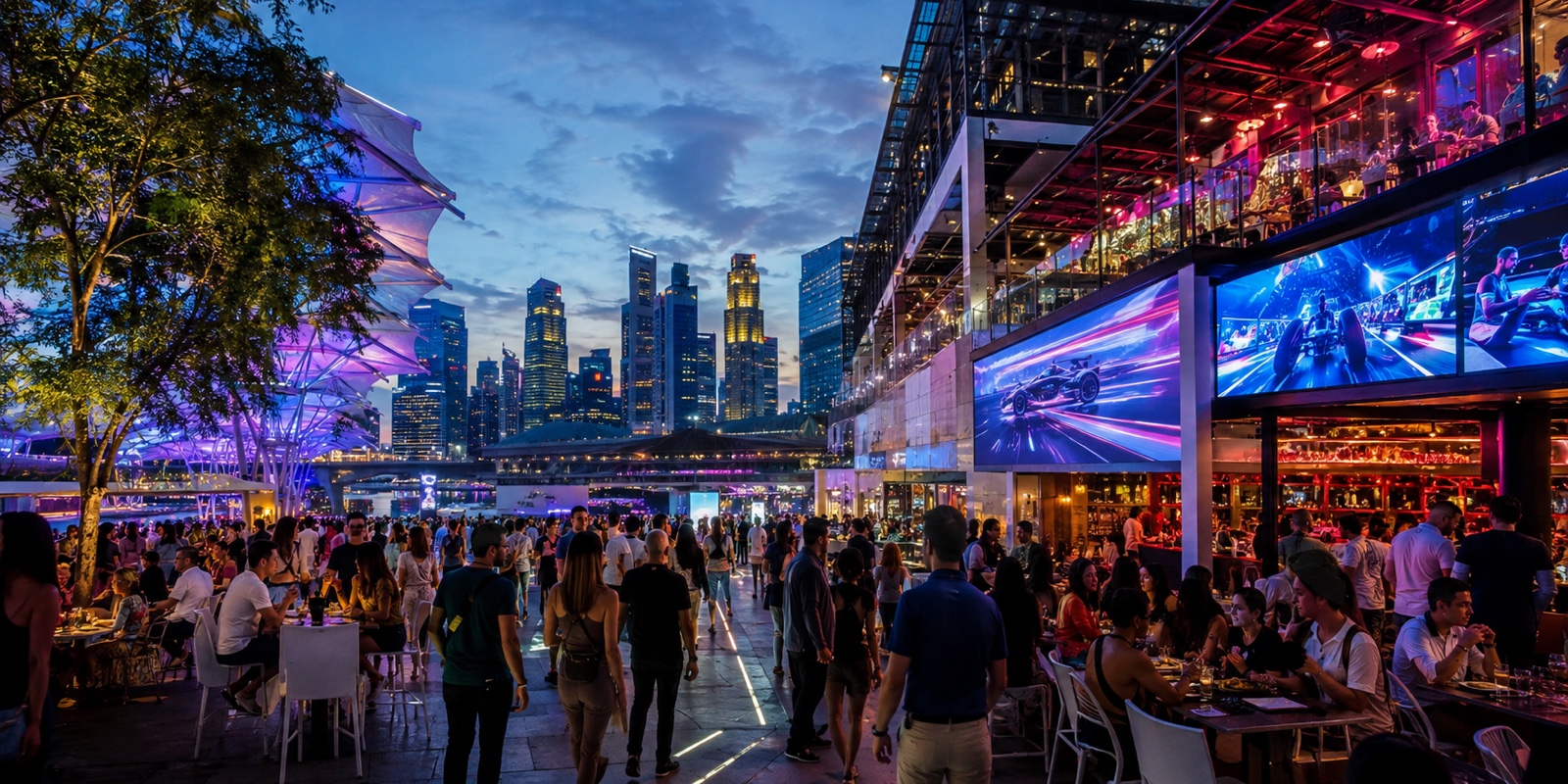
Singapore has unveiled the 2026 Grand Prix Season programme, extending race-week activity across retail, entertainment, esports, dining and automotive experiences from 2 to 11 October. The programme shows how the city is using a major sporting event as a platform for visitor spending and brand partnerships beyond the circuit itself.
The Singapore Tourism Board said this year's programme has three main headliners and a wider group of partners. New elements include adidas motorsport pop-ups at Funan and Raffles City, Orchard Paddock at Ngee Ann City Civic Plaza, and PlayStation's Gran Turismo World Series Round 3.
The Gran Turismo competition will be held at Marina Bay Sands on 3 October and will be the championship's first stop in Southeast Asia. Porsche will also stage Raceborn Fest at Guoco Midtown, including the Southeast Asian unveiling of its new 911 Challenge race car. Clarke Quay, Zouk, TRIFECTA and LEGO are among the returning or additional programme participants.
The economic logic is to distribute attention and activity across more locations and more days. A Formula 1 race concentrates global visibility, but hotels, malls, restaurants, nightlife operators and consumer brands benefit most when visitors spend time beyond the track and residents participate in related experiences.
For participating companies, the season offers a temporary high-attention environment. Automotive, gaming, fashion and entertainment brands can connect products with a shared event rather than running isolated campaigns. Venues gain programmed traffic, while local performers and suppliers gain access to audiences assembled by the larger race platform.
The programme should not be treated as proof of higher visitor arrivals or spending. The Tourism Board announcement provides dates and activities, not a forecast or final performance result. Commercial impact will depend on attendance, conversion, hotel demand, average visitor expenditure and the share of activity captured by local businesses.
The esports component is particularly notable. Hosting a Gran Turismo championship round links motorsport with gaming and gives Singapore another format for attracting regional audiences. It also expands the commercial field to technology platforms, creators and digital communities that may not engage with conventional race hospitality.
Orchard Paddock similarly turns a shopping district into an evening programme with dining, performances and outdoor screenings. That approach can help retailers and food operators benefit from event traffic, but execution will matter. Transport, crowd management, opening hours and coordination between venue partners determine whether attention becomes useful spending.
The brand mix also illustrates a wider destination strategy. Singapore is not trying to compete only through the race. It is packaging the city as the product and using a global event to make several precincts, venues and sectors discoverable at the same time.
The next evidence to watch is operational: confirmed programme delivery, visitor participation, hotel and attraction performance, partner activations and post-event reporting. Those measures will show whether the expanded season creates incremental value or mainly redistributes activity that would have occurred anyway.
For Southeast Asian destinations, the model is relevant because major events require substantial public and private resources. Their value is stronger when local businesses can participate, the programme extends beyond a single venue and the destination retains repeatable partnerships after the event ends.
Sources
Source: Singapore Tourism Board