
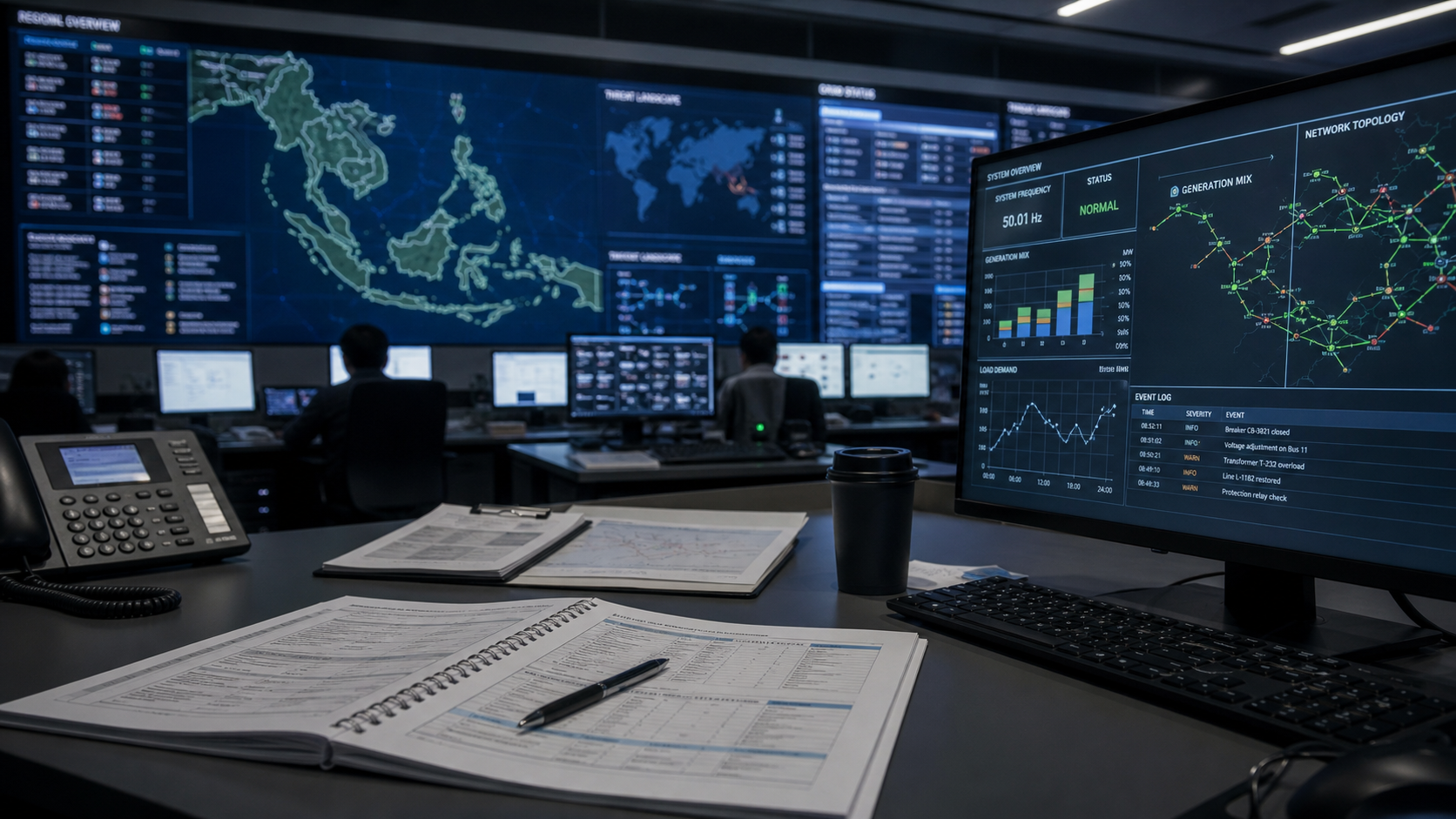
Unit 42, the threat-intelligence team at Palo Alto Networks, has published research on cyber activity affecting Southeast Asian government and critical-infrastructure targets, including energy-sector context.
For regional security teams, the useful part is the specificity. This is not a generic warning about rising cyber risk. It points to a named region, public-sector and infrastructure targets, and a technical report that security teams can compare with their own exposure maps.
Why it matters
Critical infrastructure sits close to government services, energy systems, transport, telecoms, cloud, banking and industrial suppliers. A cyber signal in this area can matter even when the source does not name a specific victim, because regional teams still need to check dependencies, access points, suppliers and response plans.
The report stops short of naming every affected organisation or turning the issue into a breach count. Its practical use is to help teams compare the tactics and target categories in the research with current risk planning, customer communications and incident-response readiness.
What regional teams should check
Security, public-affairs and communications teams should know whether they support customers in the affected sectors, whether remote access and supplier paths are mapped, and whether they have language ready if a customer, regulator or journalist asks about regional infrastructure exposure.
The immediate takeaway is focused: teams with Southeast Asia government, energy or critical-infrastructure exposure should read the report, check whether the described patterns touch their own operating environment, and keep response language factual if customers or partners ask about regional risk.