
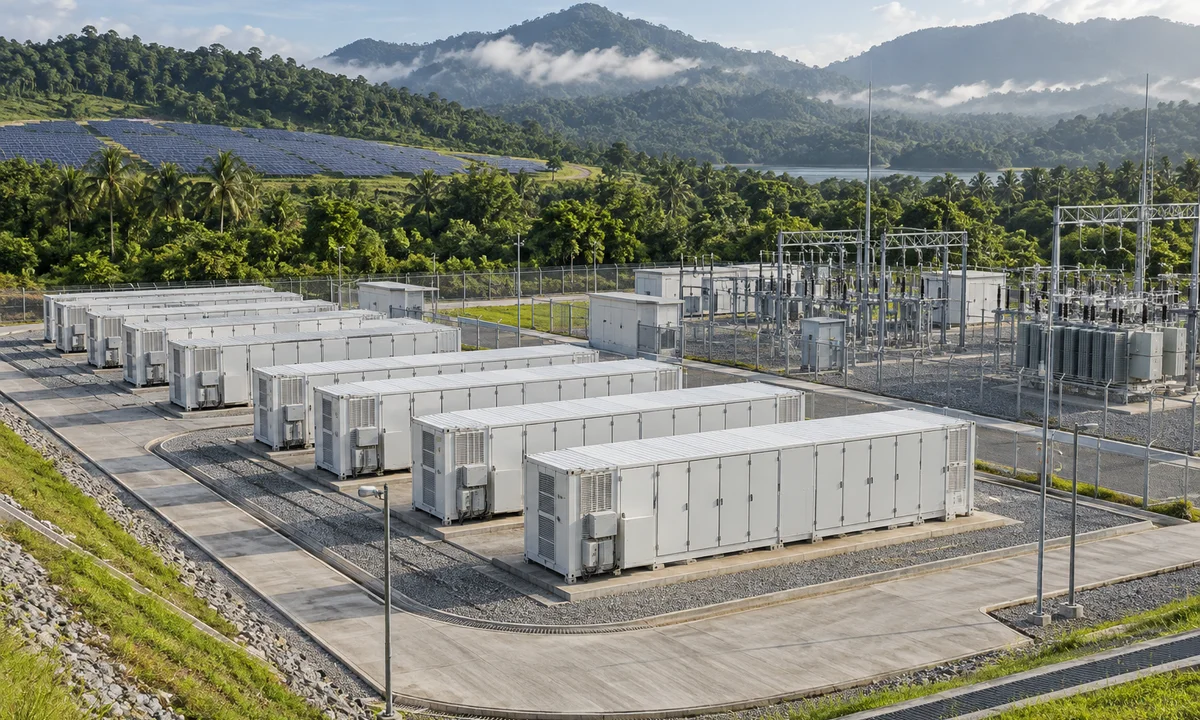
Sungrow and ERS Energy have announced battery storage projects totalling nearly 1 gigawatt-hour across Malaysia and the Philippines. The partnership milestone brings together a 441 MWh project in Bahau and a 556 MWh project for ACEN, with the two systems intended to serve different electricity-market needs.
Two markets, different roles
The companies marked the milestone with a signing ceremony, according to Sungrow’s 14 September announcement. ERS Energy is the engineering, procurement and construction contractor for both projects. Each is described as a four-hour battery energy storage system, a duration intended to move substantial amounts of electricity between periods of supply and demand.
In Malaysia, the Bahau project forms part of the national MyBeST large-scale battery initiative led by the Energy Commission. Sungrow says the 441 MWh system is intended to improve grid flexibility and accommodate more solar generation. Its role is to store electricity when it is available and release it when the grid needs it.
The Philippine project has a different commercial setting. The 556 MWh system for ACEN is intended to participate in the Wholesale Electricity Spot Market, where stored electricity can be dispatched in response to market conditions. Sungrow also describes grid-forming capability, which allows the battery system to support grid voltage and frequency.
The value is in how storage operates
The announced capacities add up to 997 MWh, close to the rounded 1 GWh figure used by the companies. That is a measure of stored energy, rather than power output or electricity already delivered. The announcement does not establish that either project has been commissioned, and the capacity should not be read as an operating fleet.
For Southeast Asian electricity systems adding variable renewable generation, the commercial question extends beyond the size of a battery. Charging schedules, dispatch arrangements and the services a system is permitted to provide affect how much value it can deliver. The Malaysian and Philippine projects illustrate why the same broad technology can have different roles in neighbouring markets.
A system designed to support a national grid programme may be evaluated differently from one earning revenue through a wholesale market. In the latter case, the timing of purchases and sales matters alongside the technical ability to respond. Grid support can add another layer of operating requirements, especially where batteries are expected to help maintain stable electrical conditions.
From signing to delivery
The release does not provide project commissioning dates, investment values or operating results. It therefore supports a defined project announcement, not claims about realised savings, emissions reductions or improved grid reliability. Those benefits depend on installation, connection and the way the batteries are subsequently operated.
For equipment suppliers and project developers, the partnership points to demand for construction, integration and long-term battery services in two SEA markets. For electricity buyers, its significance will become clearer as the projects move into service and their dispatch roles are established. The near-term development is a specific expansion of planned storage infrastructure, with delivery and operating performance still ahead.
Source note
Based on Sungrow’s company-issued announcement distributed by PR Newswire on 14 September 2026. Project functions and capacities are attributed to the issuer; commissioning and measured operating benefits were not established.