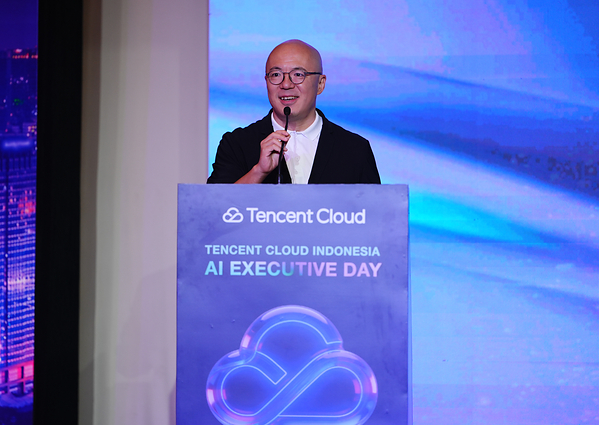
Tencent Cloud says it has expanded its international AI agent solutions to Indonesia, using an AI Executive Day in Jakarta to present WorkBuddy, Tencent Design Miora and TokenHub to enterprise leaders and partners.
The company describes WorkBuddy as a productivity agent, Miora as an AI-native creative studio and TokenHub as a model-as-a-service platform for centrally managed access to multiple large language models. PR Newswire Tencent global AI tools
Why it matters
The Indonesia announcement follows Tencent’s broader global positioning for these tools, including a May 2026 Tencent Cloud Day Hong Kong announcement that framed WorkBuddy, Miora and TokenHub as part of its enterprise AI stack.
The market signal is not just that another cloud provider is selling AI tools. It is that Indonesia is being treated as a market where agentic AI needs to be packaged into practical business workflows: productivity, creative production, model access and enterprise automation.
Tencent Cloud says the Jakarta event brought together more than 150 enterprise leaders, technology executives and partners. The release also cites local customer and partner activity across telecommunications, digital platforms and financial services.
For Indonesian enterprises, the commercial question is whether AI agents become standalone experiments or get embedded into procurement-approved software stacks with governance, security and cost controls. TokenHub’s positioning around model access is especially relevant because many companies want choice without losing central oversight.
What to watch
That makes the Indonesia launch a test of packaging. AI agents will have to be understandable to business teams, manageable by IT teams and acceptable to risk teams. A product suite that combines productivity, creative production and model access can be attractive only if companies can control who uses which model for which task.
Indonesia also has a different commercial profile from Singapore or Hong Kong. The market is larger, more distributed and more operationally varied, which means AI adoption will be shaped by partner networks, local support, pricing and integration with existing enterprise systems.
The announcement establishes Tencent Cloud’s Indonesia launch and product positioning. Broader adoption, customer performance and competitive movement against other cloud providers should be assessed as more operating evidence appears.
For vendors entering Indonesia, the lesson is that AI positioning needs to move quickly from capability lists to deployment pathways. Buyers will want to know where the tools sit in the workflow, how data is handled, how access is governed and what support is available after pilot stage.
For SEA Connect’s coverage, the follow-up questions are straightforward: which Indonesian sectors move first, whether agentic AI buying is driven by business units or central IT, and how global cloud providers adapt product messaging to local enterprise constraints.
The competitive implication is also clear. Indonesia’s enterprise AI market will not be won only through model performance. Providers will need local implementation partners, credible security answers, pricing that fits varied customer maturity and enough customer education to turn agentic AI from a headline into a budgeted workflow.
That makes partner evidence and sector-specific customer examples the next useful things to watch.
It also makes Indonesia a useful market for comparing global AI stacks against local deployment reality.
Sources and context
Based on Tencent Cloud’s company-issued Indonesia release distributed via PR Newswire APAC and Tencent’s earlier global AI tools announcement, with SEA Connect context added around Indonesia enterprise adoption and follow-up signals.