
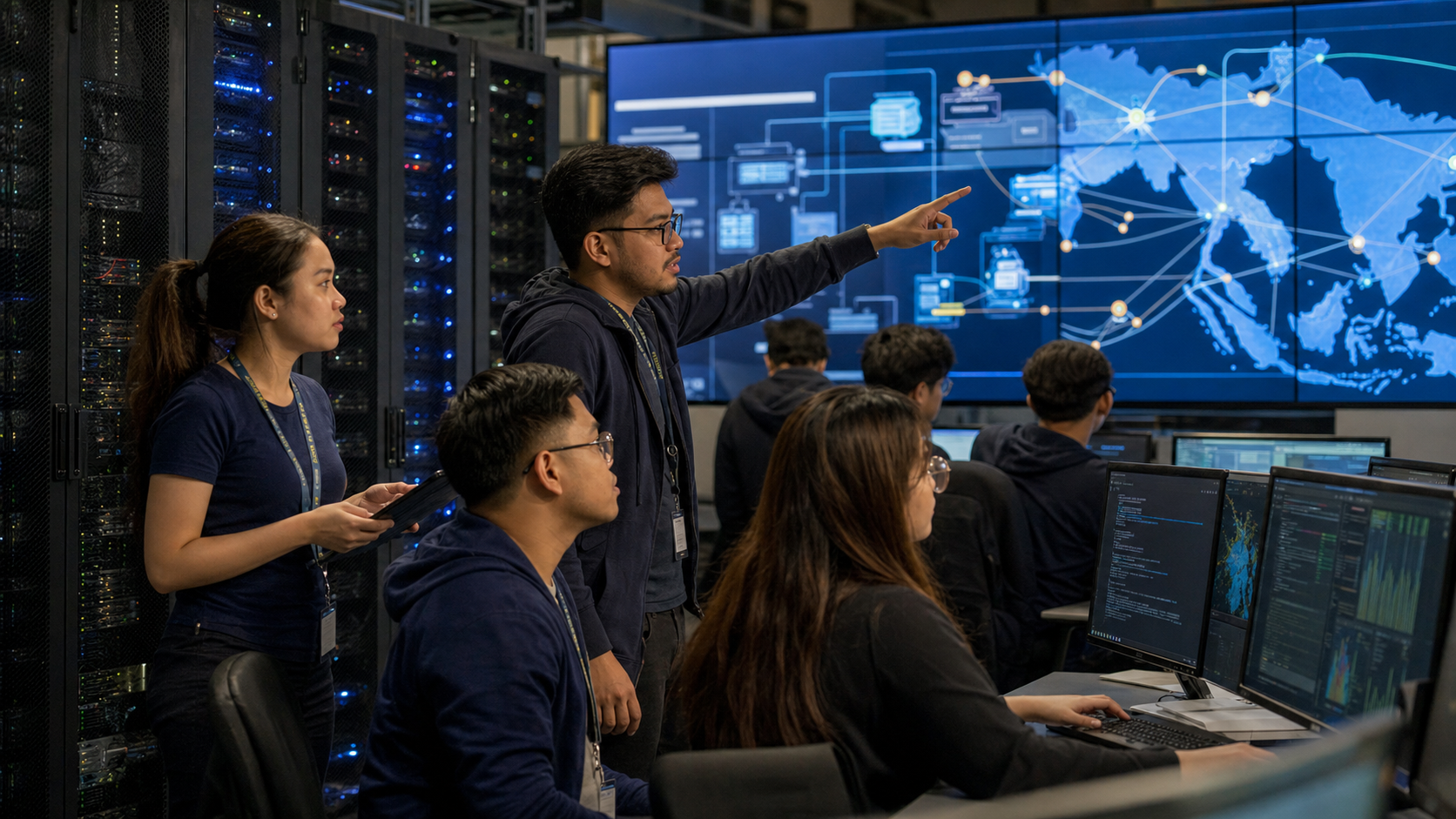
Singapore technology services group Temus has taken an undisclosed strategic stake in Thinking Machines Data Science, linking the Manila-founded artificial-intelligence consultancy to a larger regional delivery platform. Thinking Machines founder and chief executive Stephanie Sy is also joining the Temus leadership team as managing director while continuing to lead the company.
The transaction is commercially significant because it joins two different parts of the enterprise-AI market. Thinking Machines brings data-science, machine-learning and analytics delivery developed from Manila and expanded into Singapore and Bangkok. Temus adds transformation programmes, engineering capacity and access to organisations trying to move AI projects from experimentation into operating systems. Thinking Machines company website
A regional production-AI platform
Thinking Machines will retain its brand and client relationships, according to e27. That structure gives Temus a specialist AI unit without folding it immediately into a single corporate identity, while giving Thinking Machines a broader route into regional transformation work. The financial terms and ownership percentage were not disclosed.
For Southeast Asia, the stronger story is the scaling model behind the deal. The region has many AI pilots but fewer teams able to combine data engineering, model development, governance and production deployment across several markets. Connecting Manila-based technical capability with Singapore-led regional delivery is one way companies are trying to close that gap.
The deal also reflects a wider shift in professional services. General technology consultancies are building or buying specialist AI capability, while independent data-science firms need distribution, implementation capacity and larger client programmes. Strategic stakes can preserve a specialist firm’s talent and operating culture while providing the commercial reach needed for larger assignments.
What will show whether the combination works
Thinking Machines says it has worked with more than 110 clients across banking, retail and government. Those relationships are strategically relevant, but the transaction should be judged on what follows: larger multi-market deployments, named production systems, measurable adoption and evidence that the combined teams can move beyond advisory work.
The first indicators will be how Temus and Thinking Machines divide delivery responsibilities and whether they announce projects that combine specialist model work with broader cloud, data and organisational transformation. Leadership integration is visible immediately; operational integration and customer outcomes still require later evidence.
The transaction therefore marks more than a change in ownership. It positions a Philippine-founded AI company inside a Singapore-based regional group while retaining its identity—an example of how Southeast Asia’s enterprise-AI ecosystem may scale through cross-market combinations rather than relying only on expansion by global technology vendors.
Source note
The transaction details are based on e27 reporting. Thinking Machines and Temus company pages provide entity and operating context; no standalone transaction announcement was visible in the Temus newsroom at publication time.