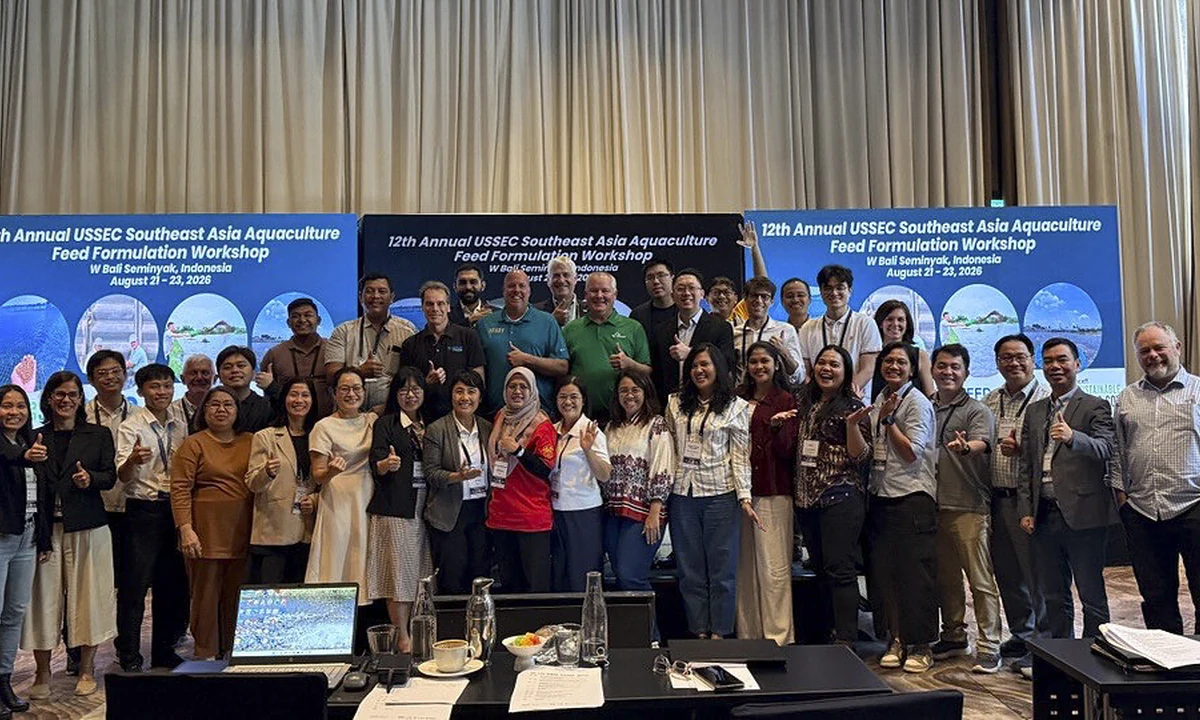
The U.S. Soybean Export Council held two aquaculture feed-formulation workshops in Bali, bringing commercial formulators and nutritionists from Bangladesh and Southeast Asia together for technical training. The programmes covered practical feed design, ingredient evaluation and the use of digital tools in commercial formulation.
The events were the fourth annual Bangladesh Aquaculture Feed Formulation Workshop and the 12th Southeast Asia Aquaculture Feed Formulation Workshop. USSEC says participants came from Bangladesh, Indonesia, Malaysia, Myanmar, the Philippines, Singapore, Thailand and Vietnam. The release does not provide a total attendance figure for the two programmes.
Around 25 technical presentations were delivered, according to the council, alongside exercises based on commercial formulation scenarios. The sessions examined ingredient performance, supply reliability, production processes and sustainability. That agenda reflects the trade-offs feed manufacturers face when balancing nutrition, availability, cost and environmental targets.
What the announcement establishes
Feed is a major operating cost in aquaculture, so formulation capability can affect farm economics beyond the workshop room. Consistent ingredient specifications help nutritionists predict performance, while changes in commodity prices or availability can require rapid reformulation. Training can strengthen those decisions, but the release does not report participant assessments or later production results.
USSEC promotes U.S. soy as a reliable and sustainable ingredient for aquafeed. Those product claims come from an organisation representing the U.S. soy supply chain and should be read as attributed industry advocacy. The announcement does not compare workshop formulations through independent trials or publish feed-conversion, growth or cost results.
The council says soybean exports to Bangladesh, Indonesia and Vietnam reached 4.65 million metric tonnes in the 2025/26 marketing year to the reporting date, while soybean-meal exports totalled 1 million tonnes. Those figures indicate the commercial scale of the underlying ingredient trade, though they cover several uses and do not measure aquafeed consumption alone.
What to watch next
Bali provided a regional setting for sharing formulation practices across markets with different species, production systems and ingredient availability. A common training programme can improve technical vocabulary and supplier relationships. Its effect will depend on whether participants apply the methods in feed mills and whether performance is measured after formulations change.
For Southeast Asia’s aquaculture sector, the useful signal is continued investment in technical capability across the feed value chain. As production expands, manufacturers need stronger formulation, quality-control and sourcing skills. Workshops can support that need, while commercial evidence must come from feed trials, production data and repeat adoption by mills.
The next evidence to watch is whether participating companies introduce new formulations, document changes in cost or performance, or expand use of the digital tools discussed in Bali. Those outcomes would show whether the programme moved beyond knowledge exchange into operating practice. Repeat participation and independently reported mill-level results would provide a stronger measure of whether the training has lasting operational value.
Source note
SEA Connect based this report on the U.S. Soybean Export Council’s public announcement distributed by PR Newswire. Workshop participation and trade figures are issuer disclosures; the release does not provide independent learning assessments, feed-performance results or commercial adoption data.