
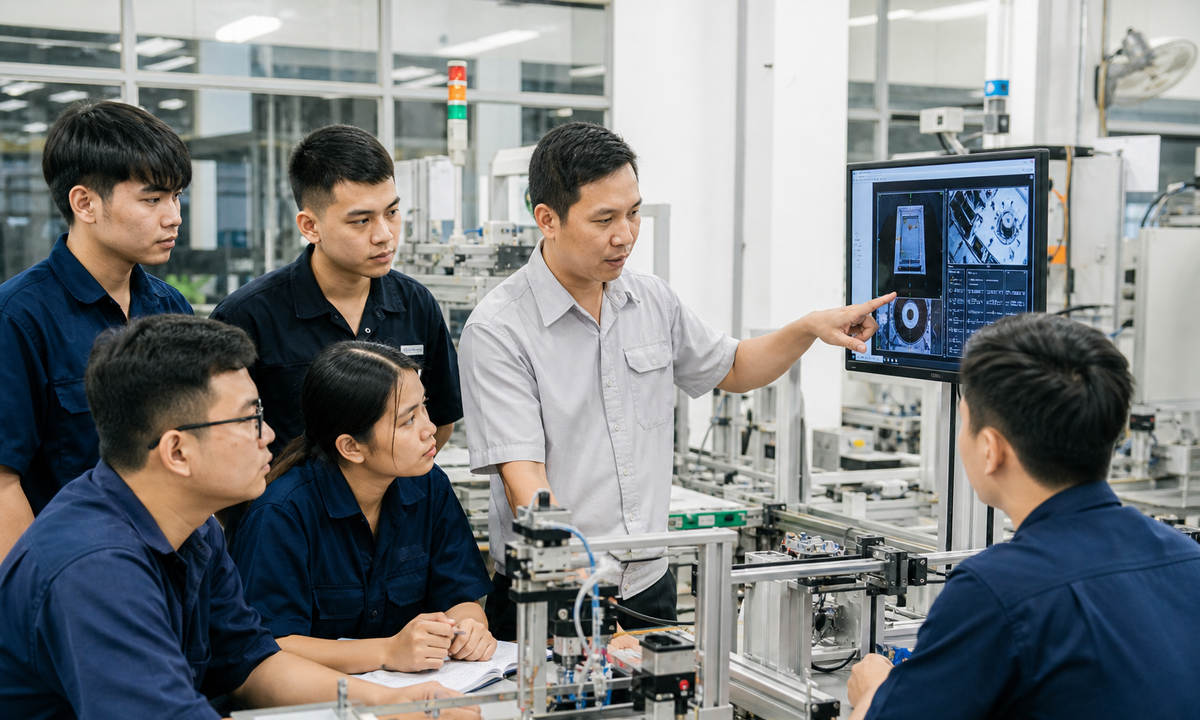
Vietnam has set a 2030 target to give at least 10 million workers basic artificial intelligence skills, linking workforce training directly to the country’s effort to build a more productive digital economy.
The Ministry of Science and Technology says the plan also calls for at least 50,000 university-qualified people who can apply AI in priority industries, 10,000 highly qualified AI professionals and 1,500 experts able to research, develop and master core technologies. These are government targets, not completed training outcomes. Vietnam Ministry of Science and Technology
The scale matters for companies operating in Vietnam because AI adoption depends on more than buying software. Manufacturers, service businesses and public agencies need people who can use systems safely, redesign work and judge when automated outputs are wrong.
For investors and technology providers, the commercial opportunity will depend on how training reaches employers outside major cities and whether courses are tied to real jobs. Practical programmes for technicians, managers and small businesses would create a broader market than specialist research training alone.
The next milestones are funded programmes, named delivery partners, enrolment by region and evidence that workers use the skills in production. Completion rates and employer outcomes will show whether the national target is changing capability rather than only expanding course numbers.
Source note
Vietnam’s Ministry of Science and Technology published the workforce targets. The figures describe goals for 2030, not training already completed.