
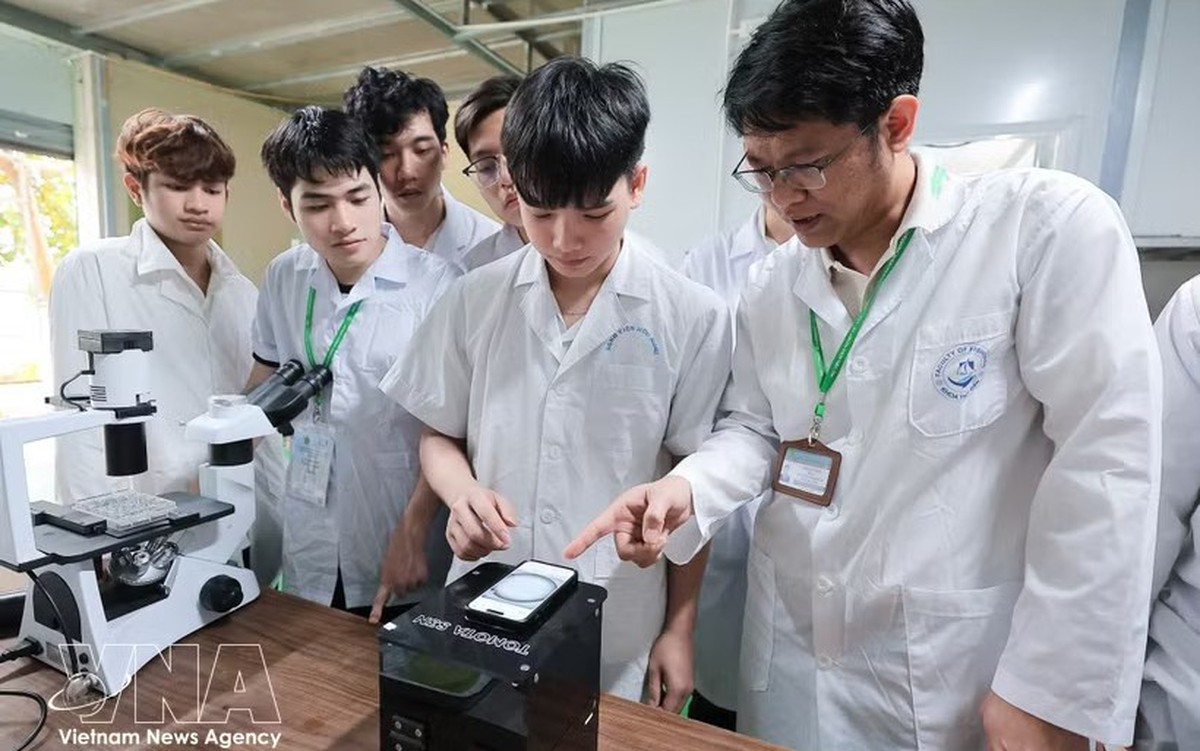
The article says building a national talent ecosystem is a long-term development strategy that will support Viet Nam's competitiveness and innovation-driven growth, and that science and technology, innovation and digital transformation need talent from both home and abroad to become genuine drivers of economic growth.
At a national conference on implementation of Resolution No. 57-NQ/TW, To Lam said science and technology, innovation and digital transformation are essential to Vietnam's long-term development goals. He said Vietnam must act now to identify priority disciplines, training models and future human resource needs, while strengthening policies to attract talented professionals, scientists and overseas Vietnamese intellectuals and to foster leading research groups and the global Vietnamese knowledge network. english.mst.gov.vn release
According to the Ministry of Science and Technology, Vietnam already has a legal framework of 10 laws, 12 decrees and six decisions of the Prime Minister on recruitment, employment and development of science and technology professionals, including more competitive salary and incentive mechanisms. But the Ministry of Home Affairs said current policies are fragmented, lack a unified national talent strategy, and do not yet provide effective systems for identifying, recruiting and retaining talent or for building a national talent database and a global linkage network.
Deputy Minister of Home Affairs Truong Hai Long said talent attraction has fallen short, especially for leading specialists such as chief engineers and chief architects. He cited limited financial resources and a shortage of ambitious national projects as key obstacles, and said MoHA is studying measures to support talent mobility between the public and private sectors, expand business incentives and mobilise venture capital and private investment.
Other speakers argued that talent policy should focus on impact and research conditions, not only pay. Nguyen Hoang Long called for long-term, mission-oriented programmes with clear objectives, multi-year timelines and autonomy; Dao Ngoc Chien said nurturing young scientists requires supportive academic environments, access to modern facilities and international collaboration, and noted that NAFOSTED is running the Vietnam Research Excellence Fellowship.
The article adds that Vietnam could attract more global technology professionals and investors with a clearer roadmap, better English-language public services, streamlined digital procedures and stronger inter-agency coordination. It also says MoHA is drafting a national strategy on attracting and utilising talent, with Deputy Prime Minister Pham Thi Thanh Tra calling for focus on AI, big data, cloud computing, semiconductors and other strategic fields, plus freer movement of talent across sectors and a national list of priority industries and projects.
The Ministry of Science and Technology published the full account of the national talent-policy discussion and the measures now under development.