
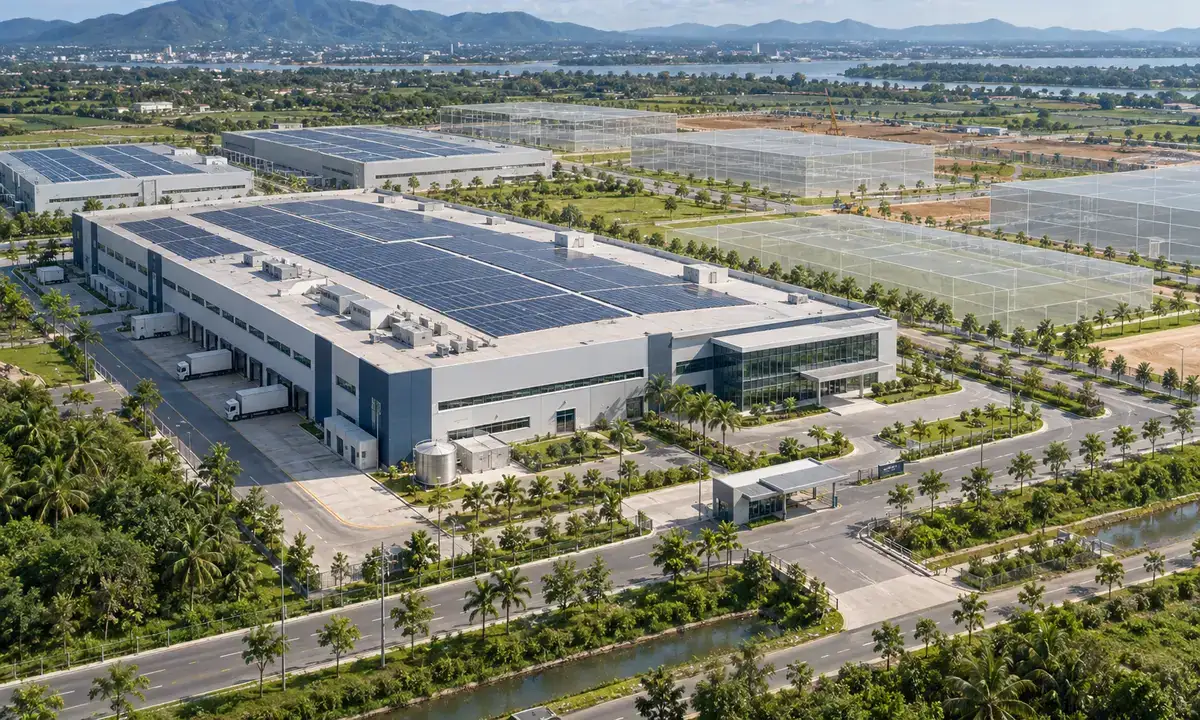
Ryder Industries plans a second phase of electronics manufacturing investment in Vietnam, with completion of a new facility targeted for 2027.
What the announcement says
The company said the project will be developed on a 22,000-square-metre site near its existing Phase 1 operation. Four buildings are planned, with a combined floor area of 38,000 square metres.
Ryder expects the new phase to expand its existing Vietnam production capacity by about four times. That is the company’s forecast for a planned project, not a measure of capacity available today.
What remains to be established
The announcement says the campus would integrate printed-circuit-board assembly, plastics moulding and injection, final assembly and supporting facilities. Completion, fit-out and production readiness remain future steps. Bringing those stages together could reduce transfers between suppliers and simplify production oversight. The practical outcome will depend on equipment choices, workforce skills, local sourcing and customer qualification. Ryder has not disclosed customer names, committed volumes or the Phase 2 investment value. Those variables will determine how much usable capacity the site ultimately adds. Customers assessing the project will therefore need to distinguish building completion from production readiness. Equipment validation, process certification, workforce ramp-up and supplier qualification can each affect the interval between construction and commercial output. Ryder’s existing nearby operation may provide experience and staff, but the announcement gives no transfer plan.
Why it matters
Ryder said the project is in planning for building design, permitting, construction, fit-out and solar infrastructure. The company described government approvals as well advanced, without stating that every required approval has been secured.
The site is around five kilometres from Ryder’s existing facility and about a 30-minute drive from Long Thanh International Airport, according to the company. That proximity is intended to let the expansion build on the existing team and operating base.
The plans include 6,000 square metres of rooftop solar photovoltaic panels with stated capacity of 1 megawatt. The solar installation is planned infrastructure and is not yet an operating generation asset.
For electronics customers, the proposed campus could add an integrated manufacturing option in Vietnam and support supply-chain diversification across Asia if it is completed and qualified as expected.
The development also reflects Vietnam’s role in electronics manufacturing. Ryder cited customer demand, changing trade conditions and access to the country’s growing electronics ecosystem as reasons for the investment.
Capacity forecasts do not by themselves establish future output, customer allocations or delivery dates. Buyers would still need product-specific qualification, quality evidence, lead times and contractual commitments.
Engineering Update places full production in the final quarter of 2027. Ryder’s own announcement states a 2027 completion target but does not provide that more specific production timetable.
The business signal is a concrete site and capability plan close to an existing operation. The next meaningful evidence will be construction progress, completed approvals, equipment installation and production qualification.
Source note
SEA Connect based this report on Ryder Industries’ corporate announcement and reviewed independent trade coverage from Engineering Update. All capacity and timetable statements are presented as plans or company expectations.