Whale says it has raised a US$40 million Series C3 extension, bringing its Series C total to US$100 million as it scales enterprise AI deployments across global markets.
The Singapore-headquartered company says the extension was led by CMB International and SMBC Asia Rising Fund, with participation from Krungsri Finnovate, Singtel Innov8, Hyundai Motor Group and Charisma Partners. Earlier Series C participants named by the company include Bosch Ventures, MTR Lab, MDI Ventures, Gentree Fund and Linear Capital. PR Newswire Whale company site
Why it matters
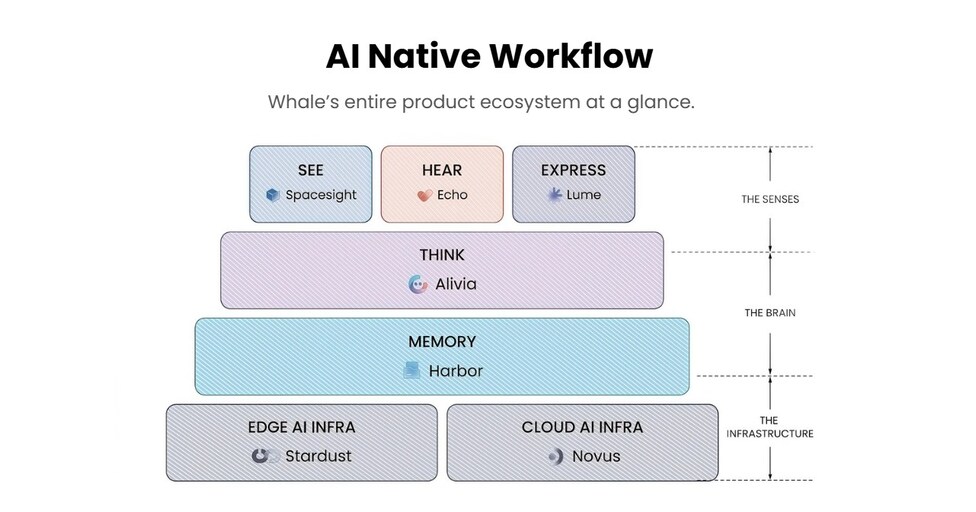
The funding is commercially relevant because Whale is not pitching AI as a document or chatbot layer only. The company describes its AI operating system as infrastructure for enterprise operations, connecting digital and physical workflows through cameras, sensors, audio inputs and other operational data.
Whale says it serves more than 1,600 enterprises in over 45 countries and manages more than 600,000 edge AI nodes. It identifies Asia-Pacific markets including Japan, Indonesia, Malaysia and Thailand as part of its regional footprint.
The investor mix also matters. The round includes financial investors, corporate venture capital and strategic investors with regional banking, telecoms, automotive and infrastructure exposure. That points to enterprise AI demand moving closer to operational systems where distribution and implementation capacity matter.
Secondary coverage reviewed by SEA Connect largely follows the company-provided funding facts, with some outlets adding sector framing around physical-world AI and operations automation. The primary dated source remains the Whale release hosted by PR Newswire.
What to watch
This is also why the story is stronger than a simple fundraising note. Enterprise AI is moving from software demos into the messy environments where stores, factories, logistics teams and service operations actually run. Investors are backing companies that can integrate with existing operational data rather than simply offer a standalone AI layer.
For Southeast Asian buyers, the relevant question is not whether AI can analyse data, but whether it can handle fragmented infrastructure, multilingual operating teams, privacy constraints and uneven digital maturity across sites. Those are implementation problems as much as product problems.
The open question is execution. Funding and stated customer footprint show commercial momentum, but the next evidence points are deployment depth, renewal behaviour, customer case studies and whether enterprise buyers treat physical-world AI systems as strategic infrastructure or as narrow automation projects.
The presence of investors linked to banking, telecoms, automotive and regional corporate networks may help Whale with market access, but it also increases expectations. The company will need to show that its AI operating-system pitch can translate into measurable operational value across different industries.
For communications teams, the useful framing is practical: this is not a generic AI story, but an enterprise-operations story. The strongest follow-up evidence would be customer deployments that show which workflows changed, how fast they scaled and what safeguards were needed.
That makes the next six to twelve months important. If Whale uses the funding to publish more market-specific deployment evidence, it can separate itself from the broad wave of enterprise AI claims. If not, the story risks looking like another well-funded platform promise in a crowded category.
Source note
This article is based on Whale’s company-issued release distributed via PR Newswire and Whale’s company site. Additional public coverage was reviewed for context, while the funding facts are attributed to the company-issued material.